 Image 1 of 4
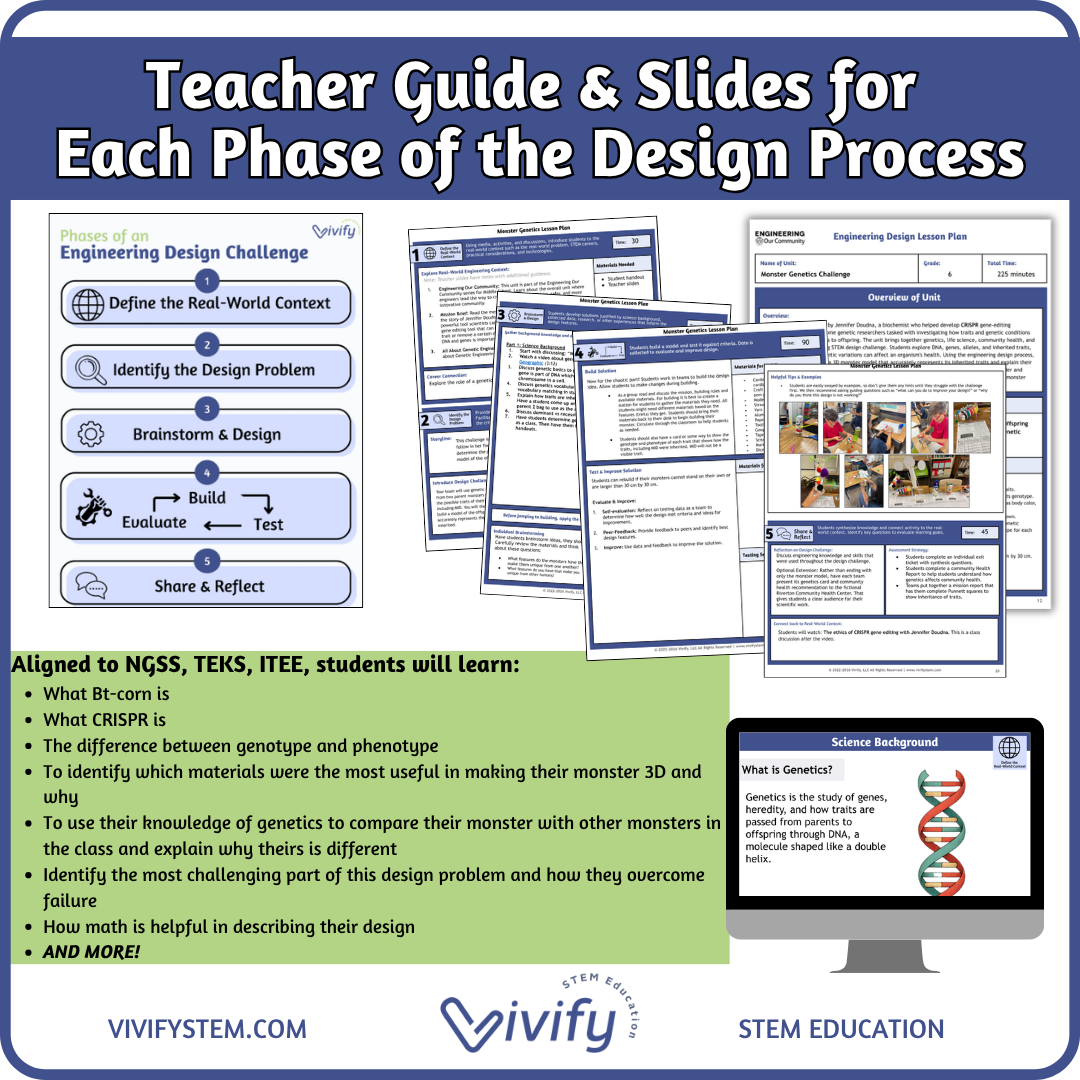 Image 2 of 4
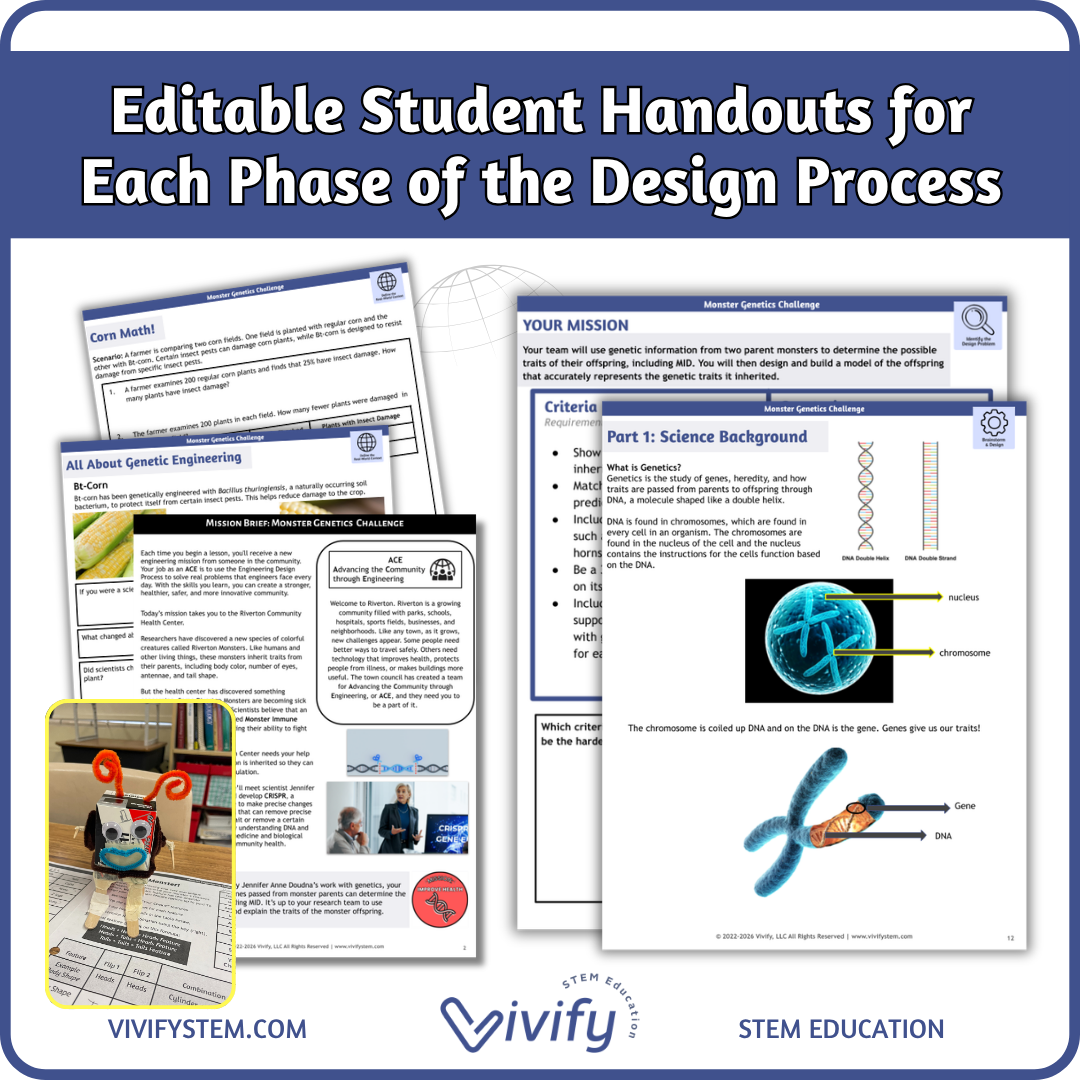 Image 3 of 4
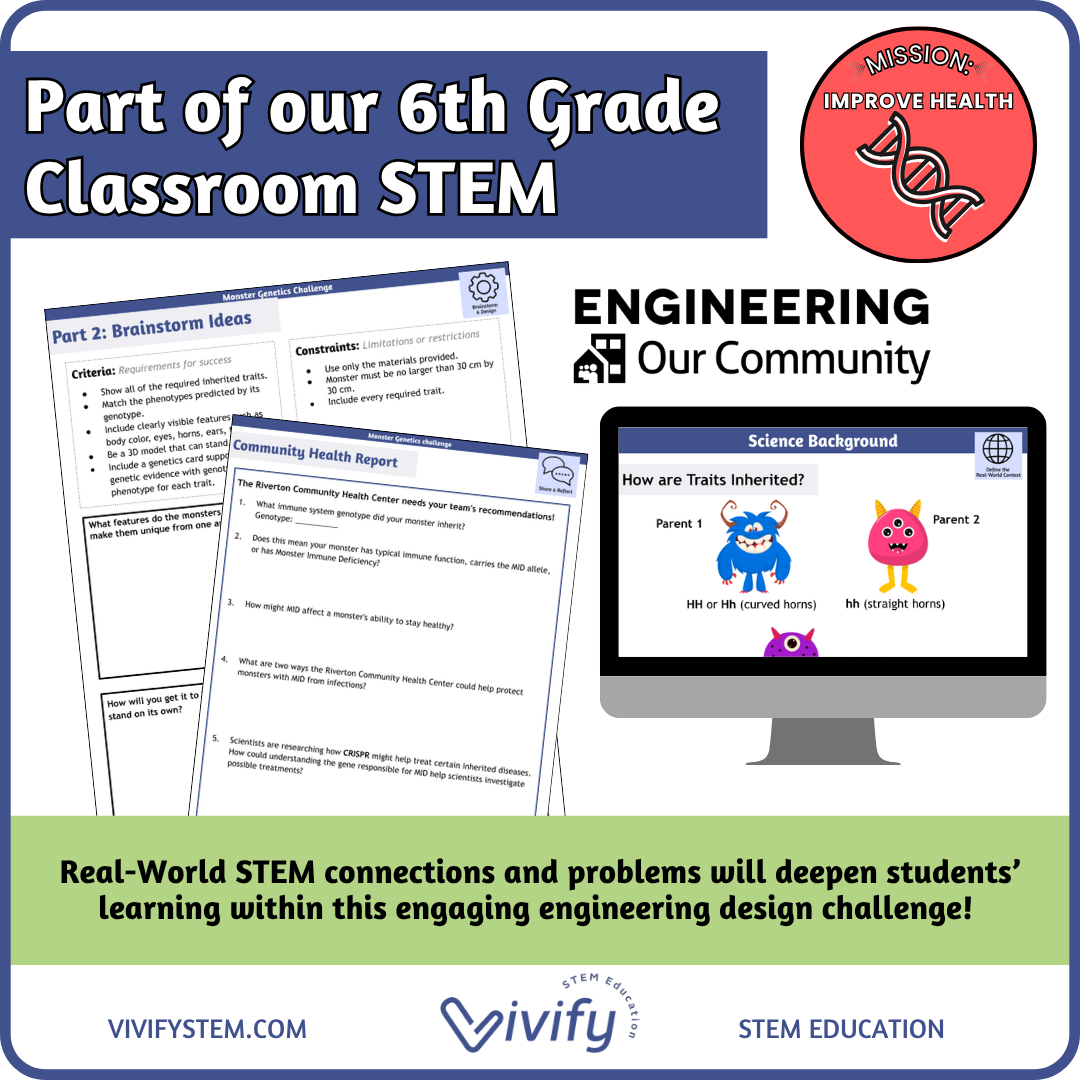 Image 4 of 4
Lesson Overview
Monster Genetics STEM | Engineering Our Community
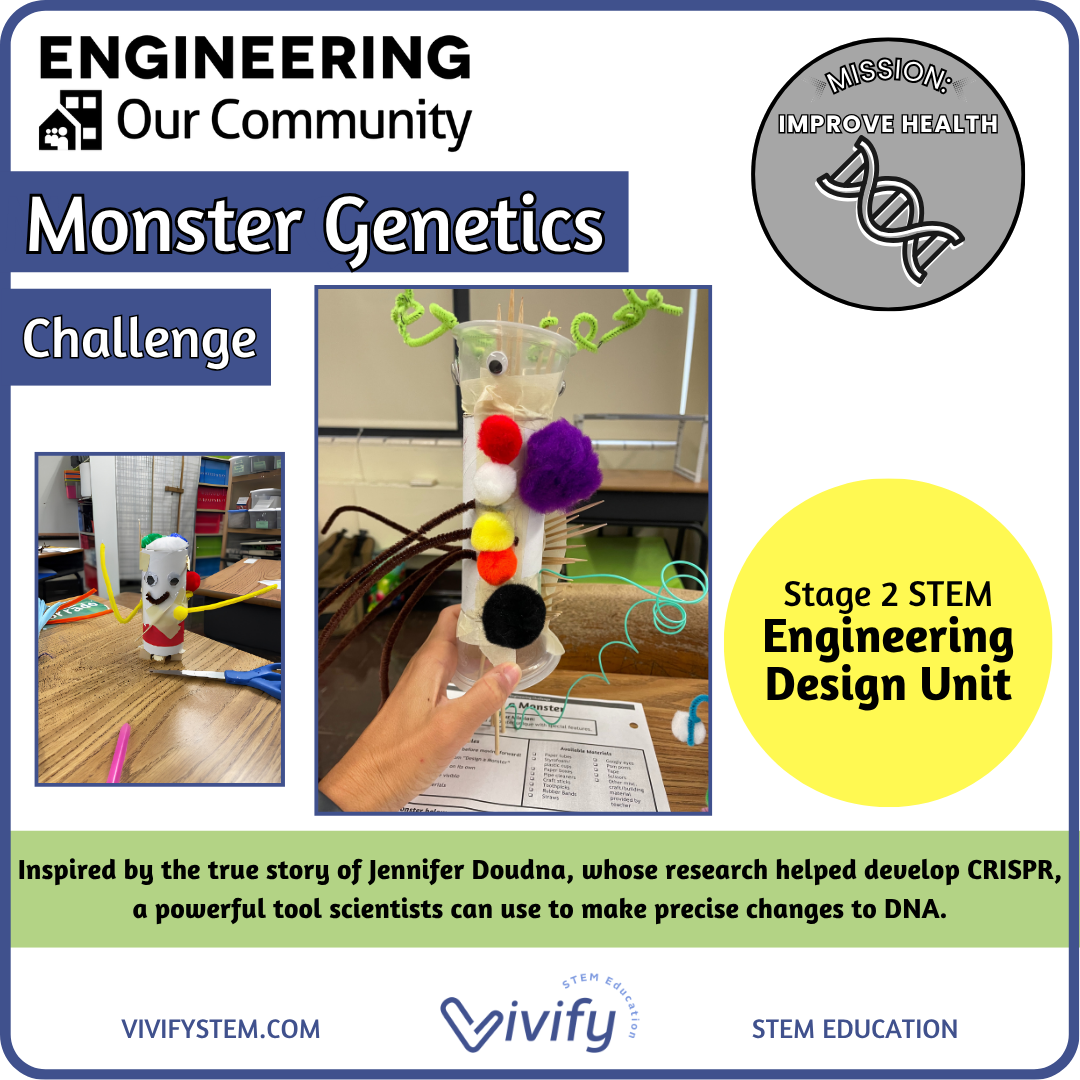
Monster Genetics STEM is inspired by Jennifer Doudna, a biochemist who helped develop CRISPR gene-editing technology. Students become genetic researchers tasked with investigating how traits and genetic conditions are inherited from parents to offspring. The unit brings together genetics, life science, community health, and engineering in an engaging STEM design challenge.
Students explore DNA, genes, alleles, and inherited traits, including how certain genetic variations can affect an organism's health. Using the engineering design process, students design and build a 3D monster model that accurately represents its inherited traits and explain their design using genetic evidence. Students also investigate a fictional inherited immune system disorder and develop recommendations to help the Riverton Community Health Center protect the health of its monster population.
In This Lesson, Students Will Learn:
What Bt-corn is
What CRISPR is
The difference between genotype and phenotype
To identify which materials were the most useful in making their monster 3D and why
To use their knowledge of genetics to compare their monster with other monsters in the class and explain why theirs is different
Identify the most challenging part of this design problem and how they overcome failure
How math is helpful in describing their design
AND MORE!
Engineering Our Community Storyline (Adaptable for Grades 6 - 8): Welcome to Riverton. Riverton is a growing community filled with parks, schools, hospitals, sports fields, businesses, and neighborhoods. Like any town, as it grows, new challenges appear. Some people need better ways to travel safely. Others need technology that improves health, protects people from illness, or makes buildings more useful. The town council has created a team for Advancing the Community through Engineering, or ACE, and they need you to be a part of it.
Each time you begin a lesson, you'll receive a new engineering mission from someone in the community. Your job as an ACE is to use the Engineering Design Process to solve real problems that engineers face every day. With the skills you learn, you can create a stronger, healthier, safer, and more innovative community.
Use Genetics to Design a Monster: In this unit, students will use genetic information from two parent monsters to determine the possible traits of their offspring, including MID (a fictional inherited disorder). They will then design and build a model of the offspring that accurately represents the genetic traits it inherited.
Engineering Learning Goals in this unit include:
Real-World Connections: Learning about CRISPR, a gene editing tool, and Bt-corn, a GMO.
Making: Using materials to build a 3D monster, and re-designing based on criteria and constraints.
Habits of Mind: Working as a team to build a design that solves a problem and communicating ideas and provide feedback to peers.
Science: Exploring how traits are inherited and understanding the concept of genetics and how alleles are inherited from parent to offspring.
Technology: Learning about the technology to make Bt-corn that is resistant to insects and about the technology of CRISPR which is a gene editing tool.
Math: Using observations to make informed design changes, addition and division problems related to the project, and data tables.
Included in this product:
Aligned to: NGSS, TEKS, and ITEEA Standards
Complete Teacher Guide following the engineering design process
Materials list and activity suggestions
Editable teaching slides
Student handouts for each phase of the design process, including science background, STEM career connection, and more!
Two versions of student badges for completing the mission: pre-colored or a black and white option for students to color themselves to celebrate!
Recommended Materials:
Cardstock/construction paper, cardboard
Craft sticks, pipe cleaners, pom-poms
Modeling clay
Straws
Yarn
Aluminum foil
Paper cups
Toothpicks
Googly eyes
Tape, glue
Scissors
Markers
Dice