 Image 1 of 4
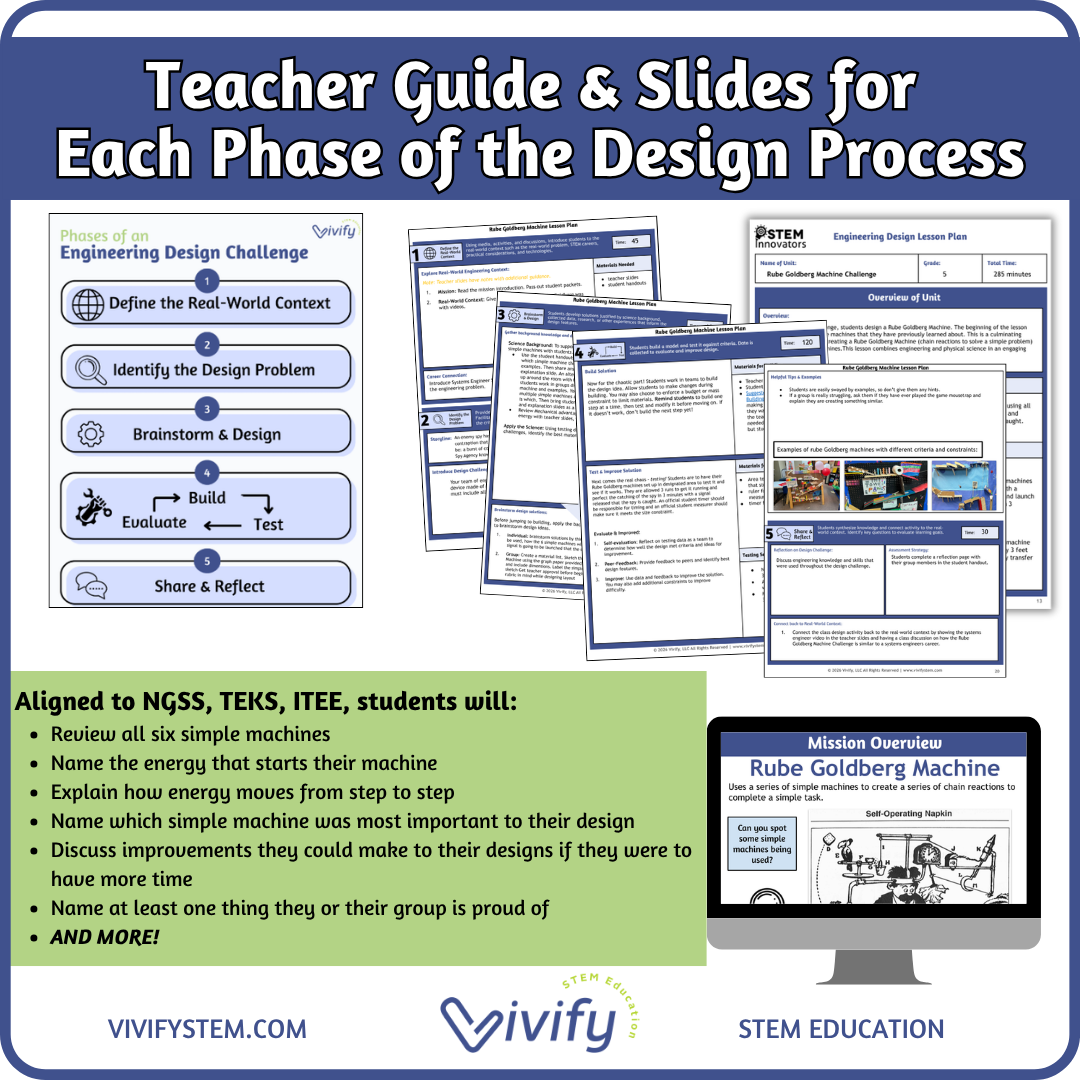 Image 2 of 4
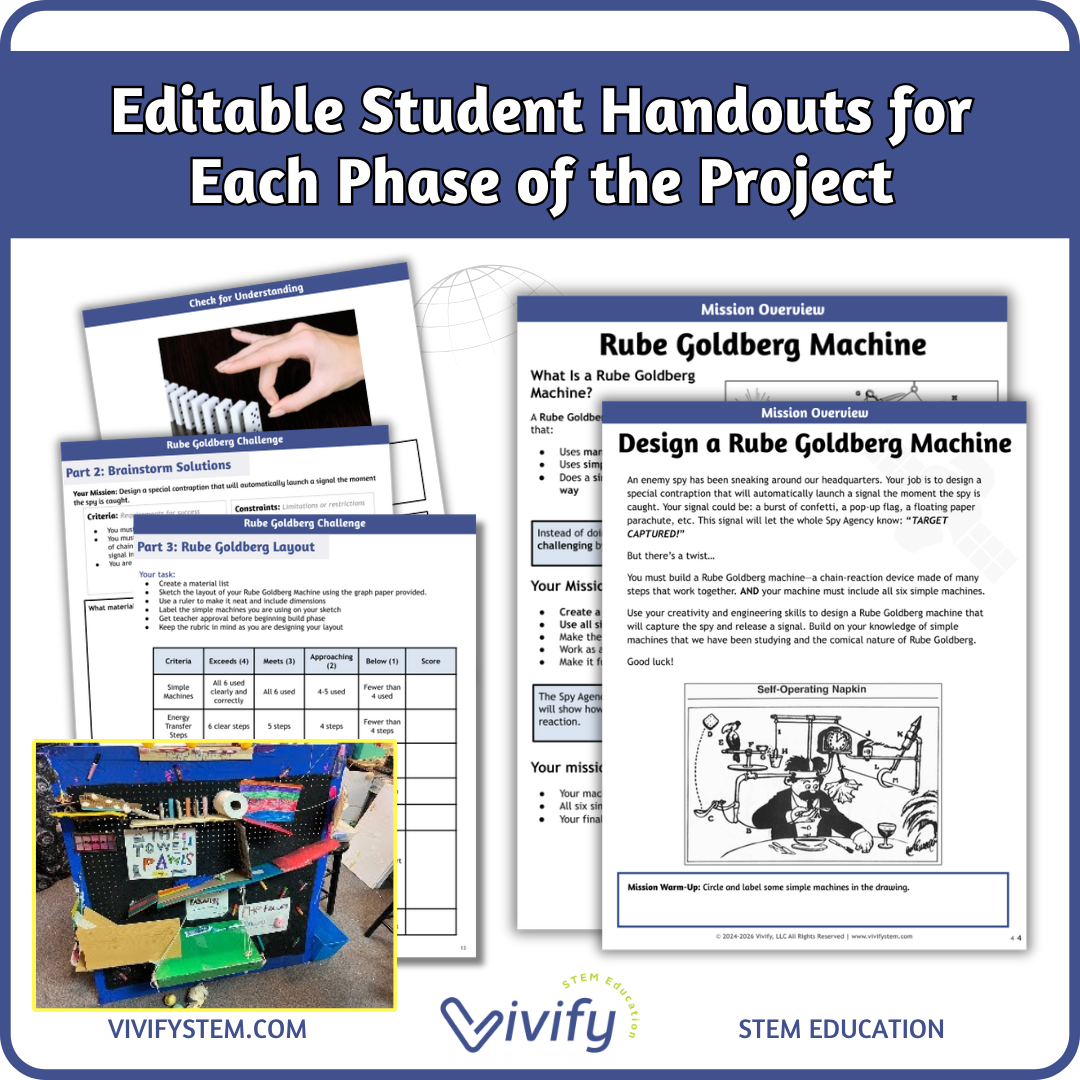 Image 3 of 4
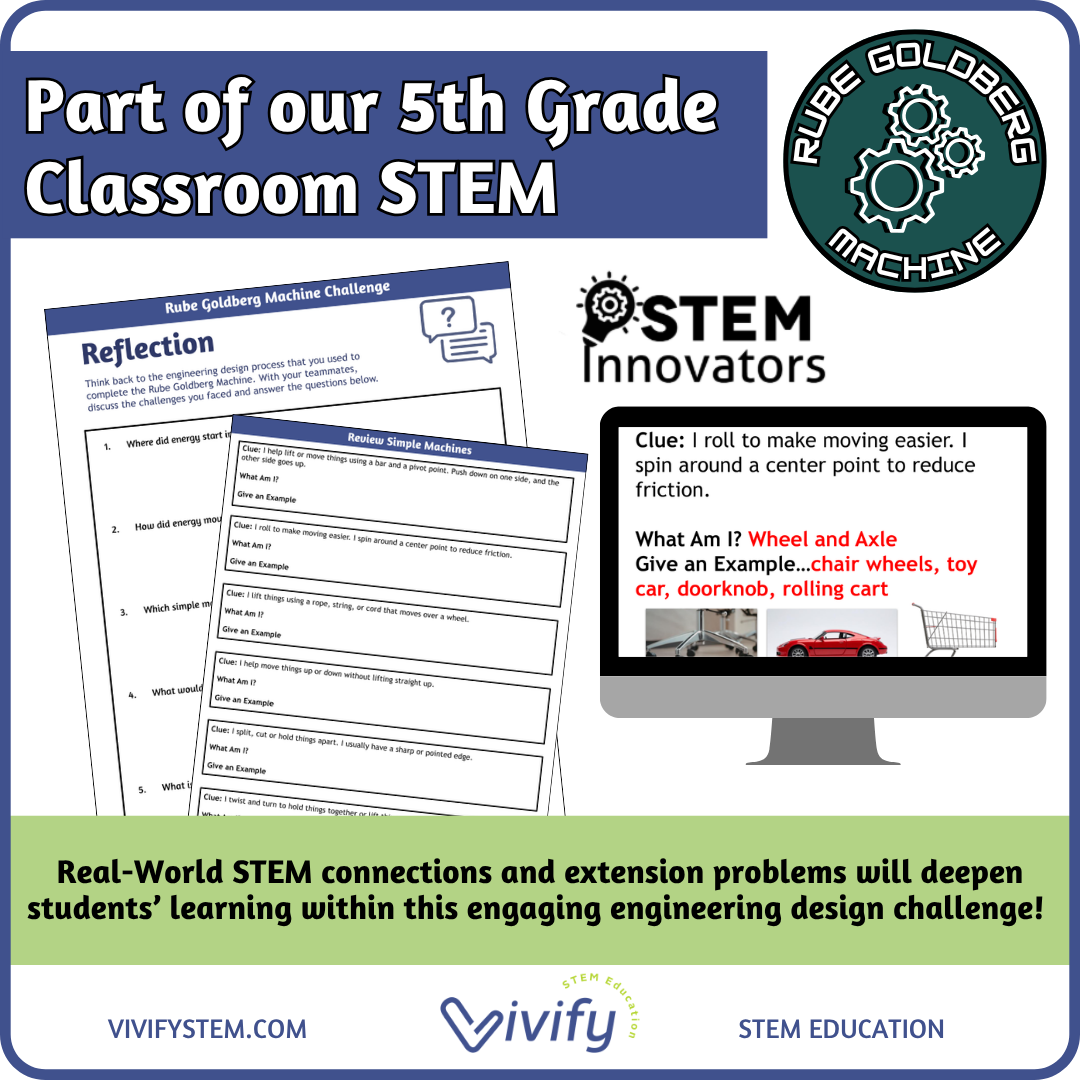 Image 4 of 4
LESSON OVERVIEW
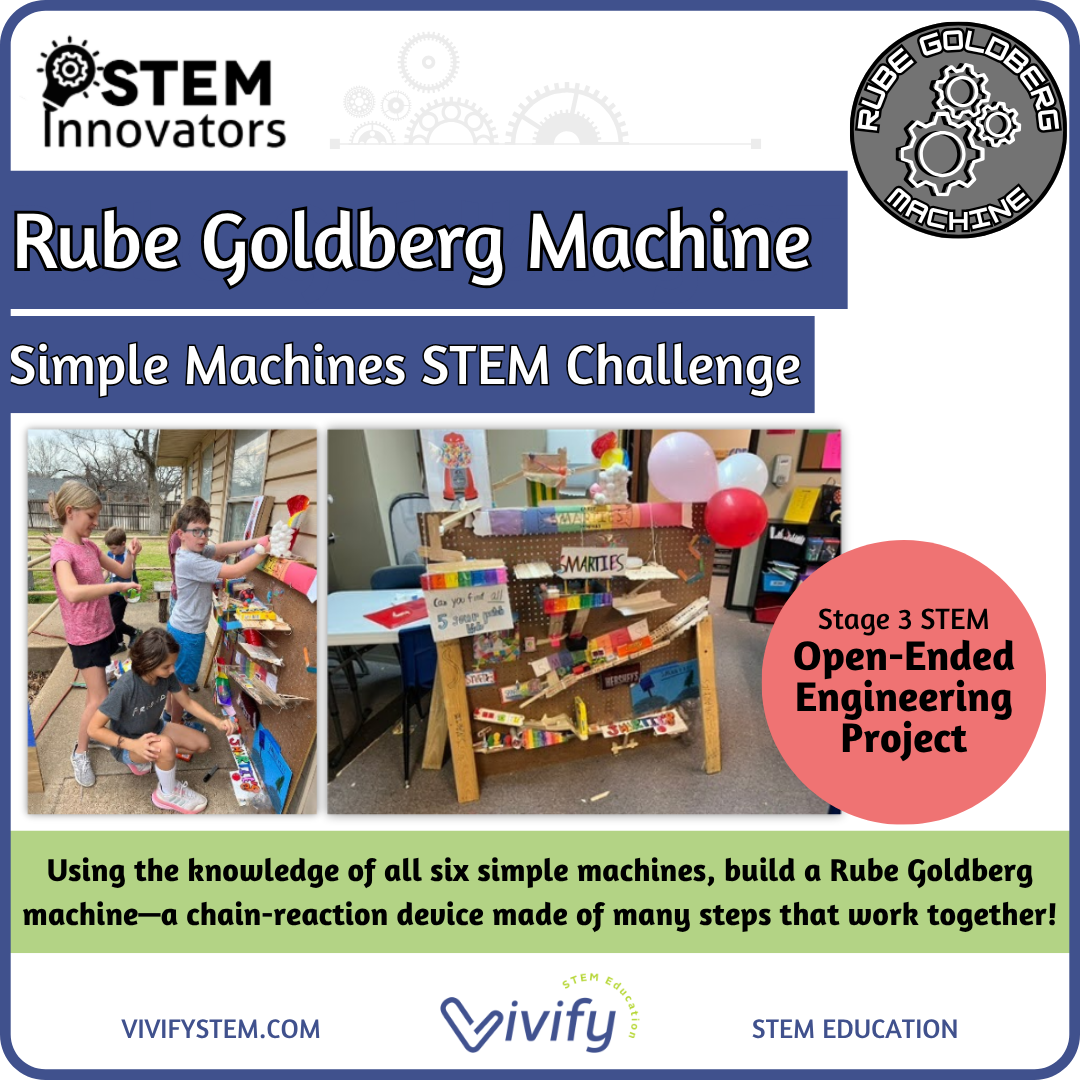
Simple Machines | Rube Goldberg Machine STEM | 5th Grade STEM Innovators
In this hands on challenge, students design and build a Rube Goldberg Machine. The beginning of the lesson will have students review simple machines that they have previously learned about. This is a culminating activity that involves creating a Rube Goldberg Machine (chain reactions to solve a simple problem) using all 6 simple machines. This lesson combines engineering and physical science in an engaging design challenge.
STEM Innovators Storyline: Agents, your mission begins now. The world’s top spy agency has recruited the brightest minds for a series of top-secret operations. Your task: design and engineer cutting-edge spy gadgets to crack codes, outsmart villains, and save the day. Succeed, and you’ll rise through the ranks to become an elite STEM Innovator, trusted with the world’s most classified missions.
A Mission to Understand Simple Machines and Chain Reactions: In this unit, students will create a Rube Goldberg Machine using all 6 simple machines to catch a spy and release a signal once the spy is caught.
At the end of this unit, students will be able to answer the following questions that cover the learning goals:
Where did energy start in your machine?
How did energy move from step to step?
Which simple machine was most important to your design?
What would you improve if you had more time?
Compare your plan with what happened during testing. How do they compare?
What was the most challenging part of this design problem? How did you overcome failure?
What data did you collect during this design challenge?
Included in this product:
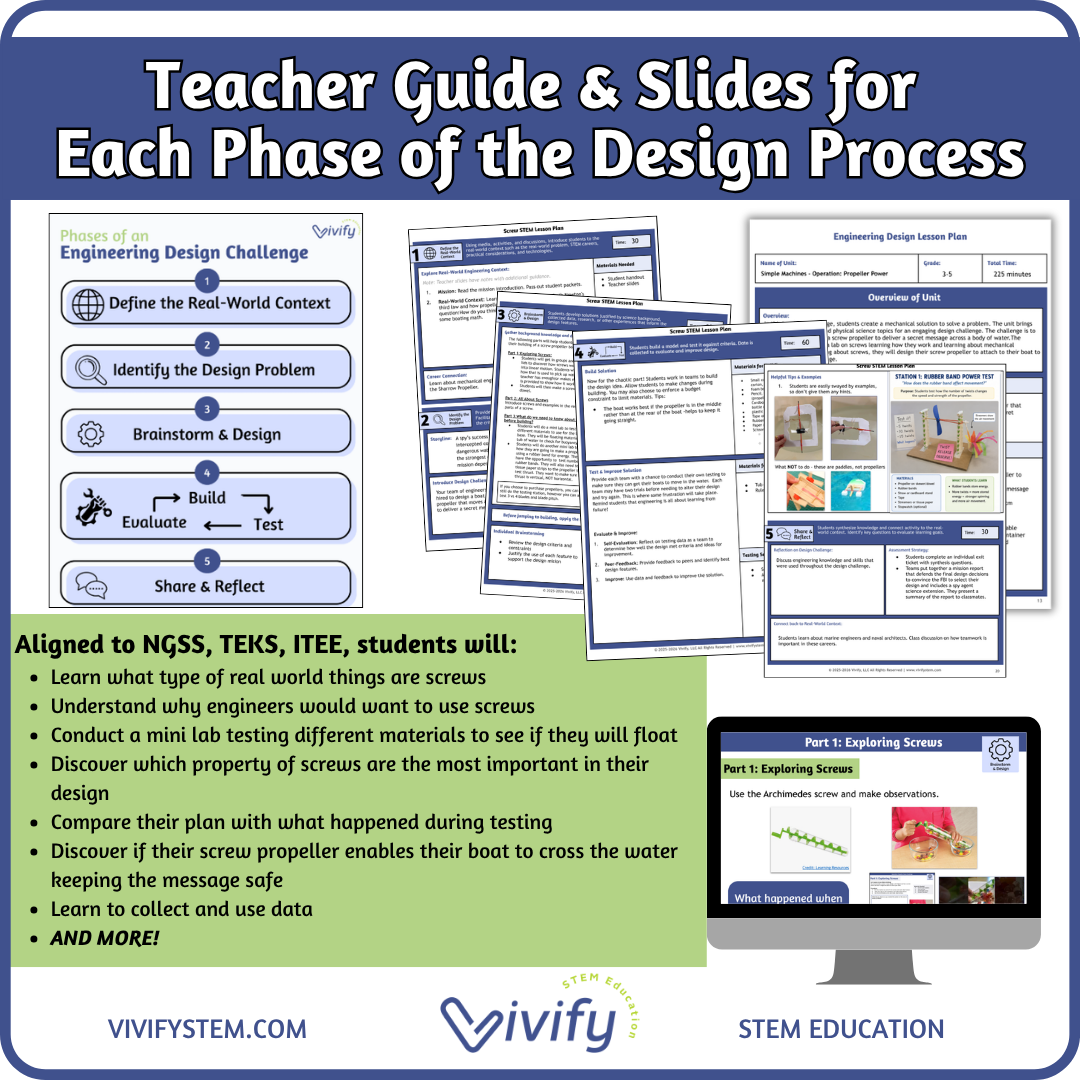
Aligned to NGSS
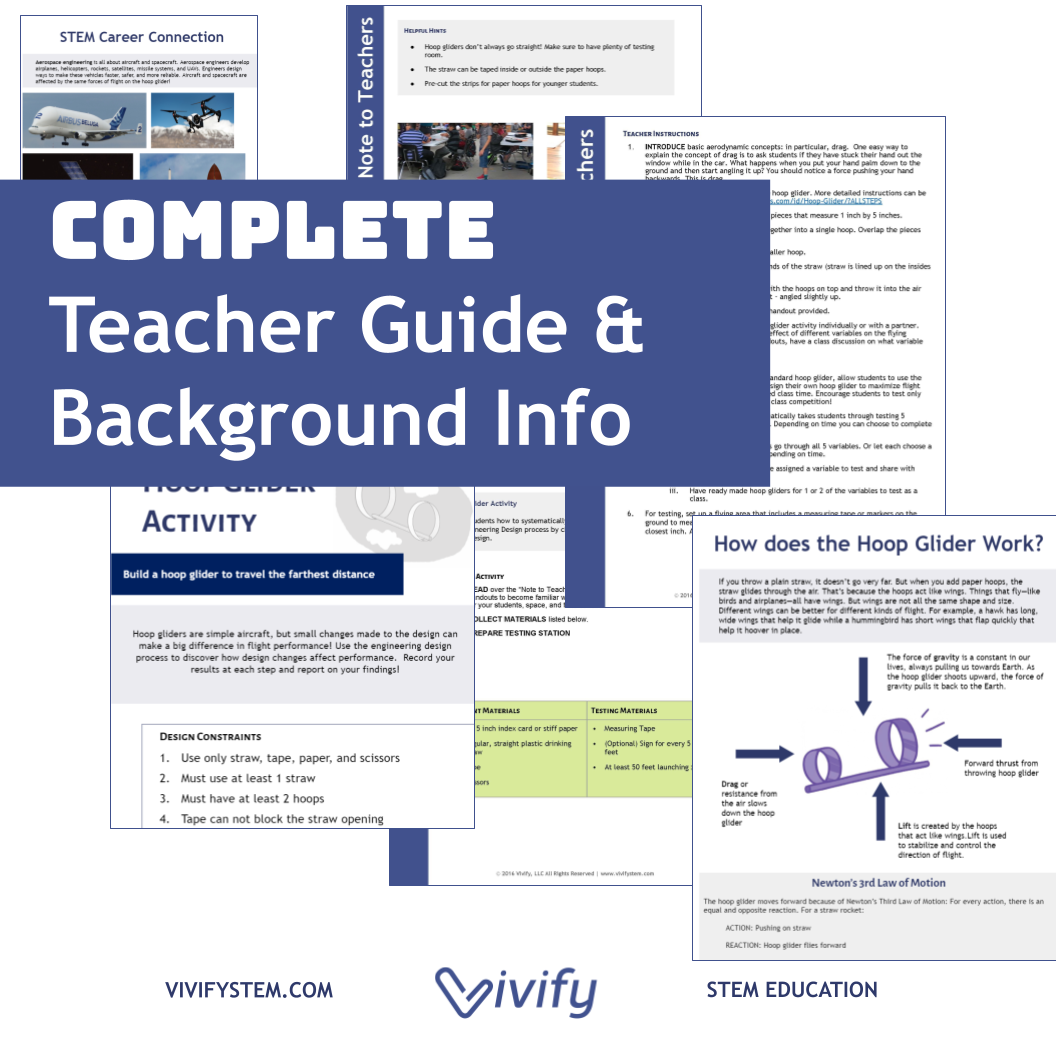
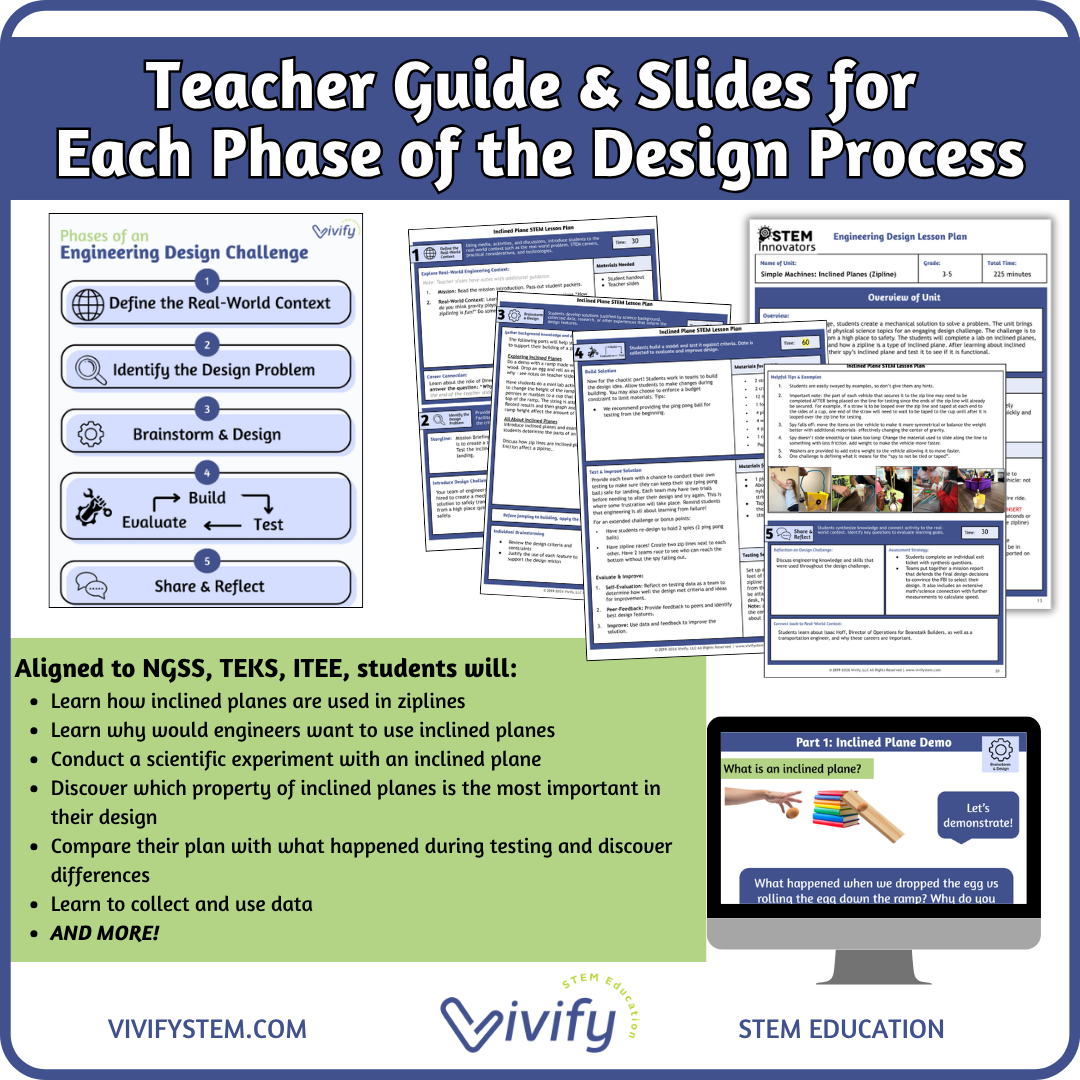
Complete Teacher Guide
Materials list and activity suggestions
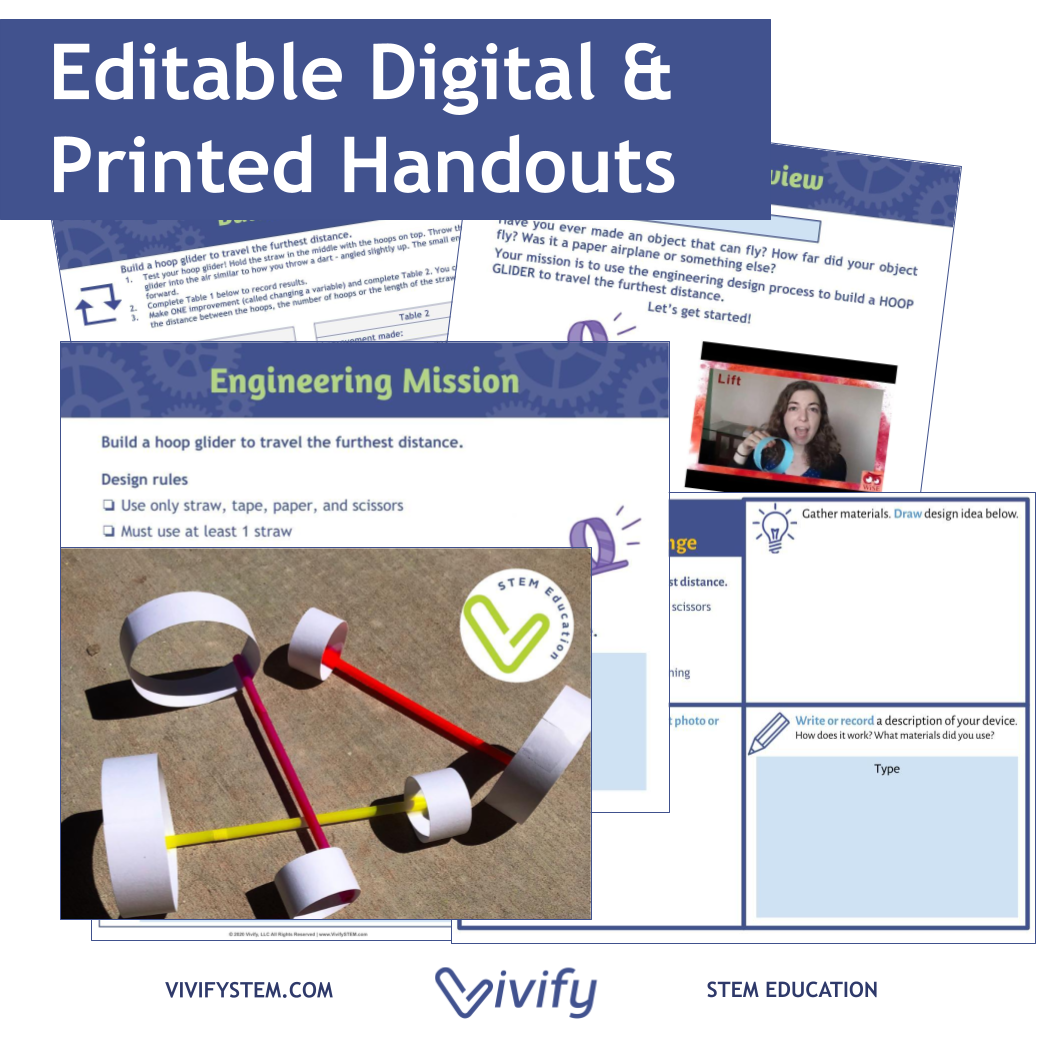
Editable teaching slides
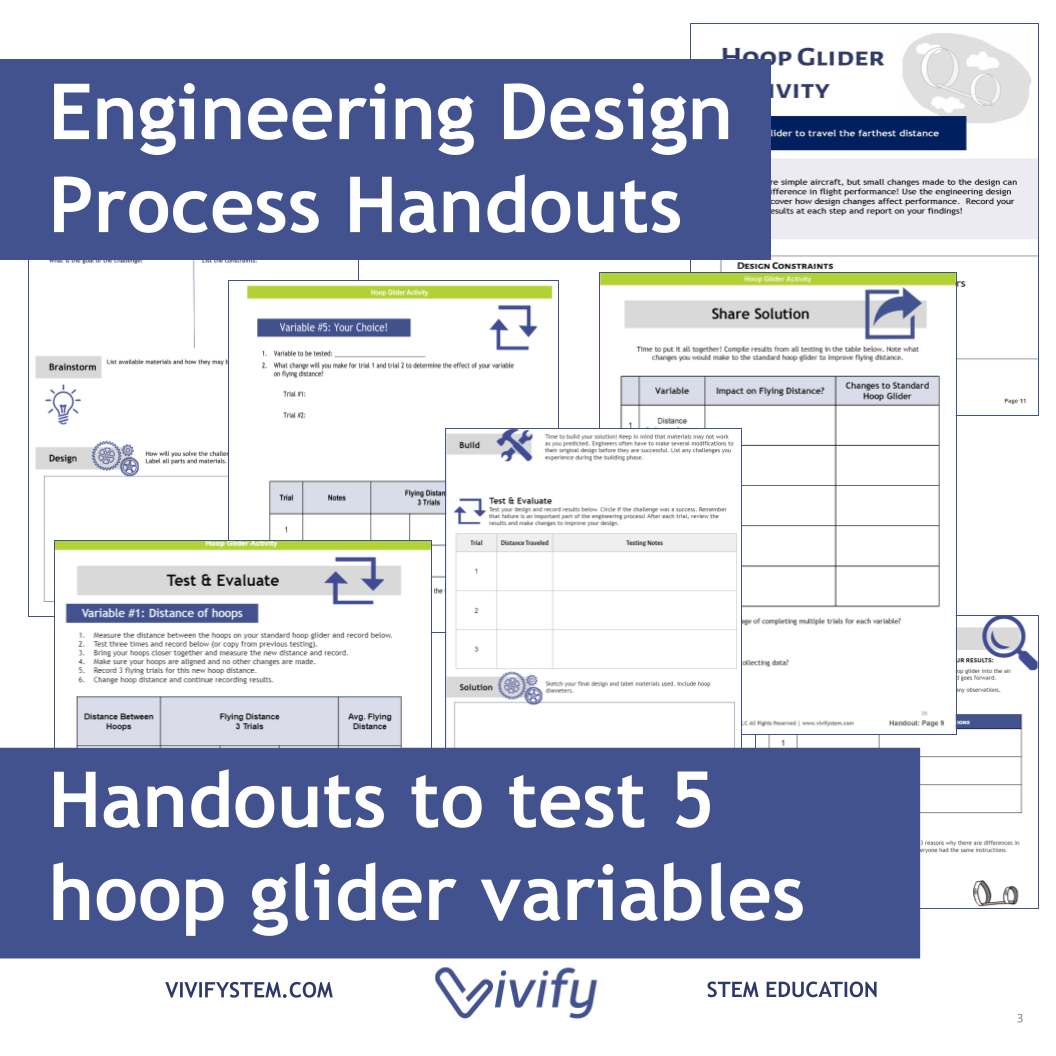
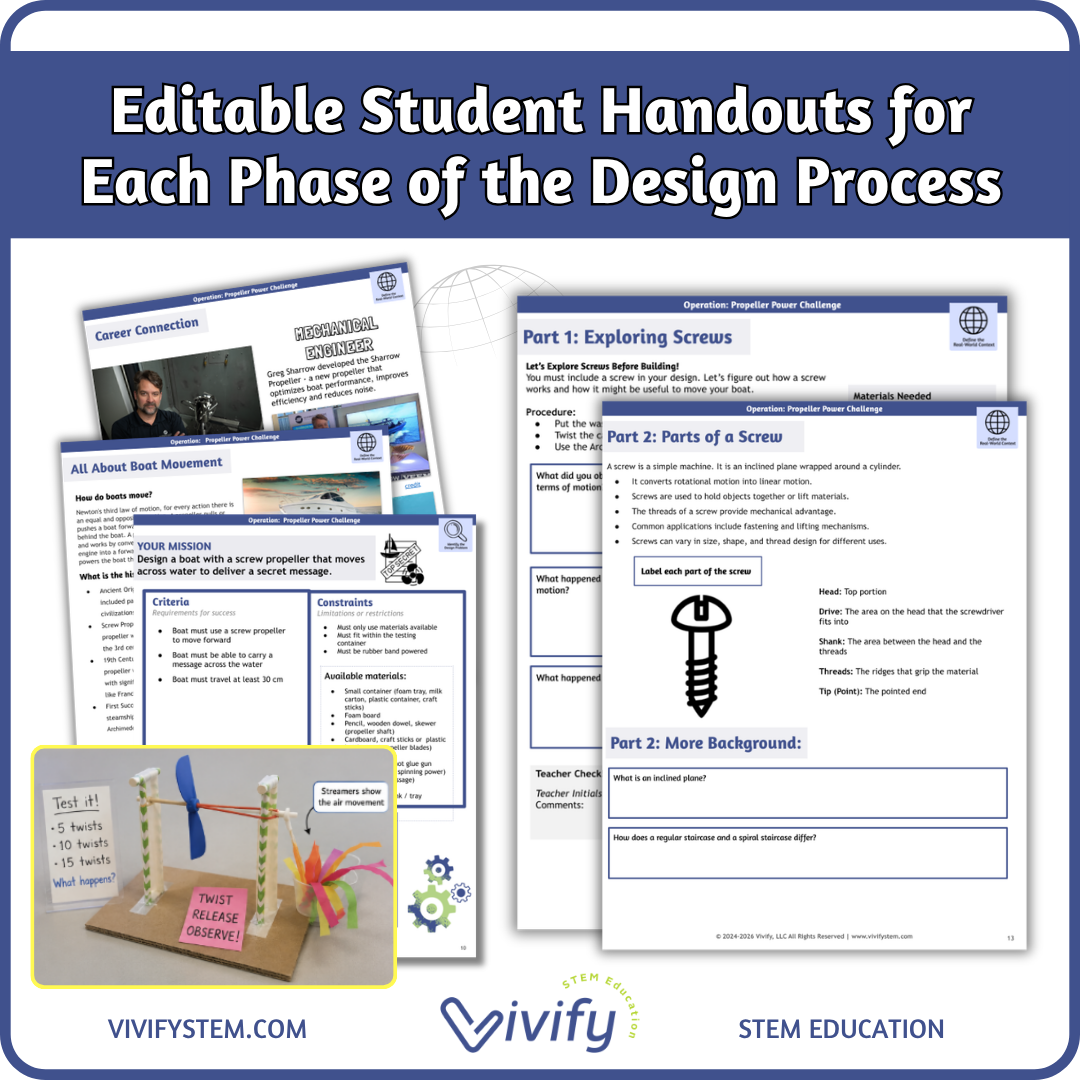
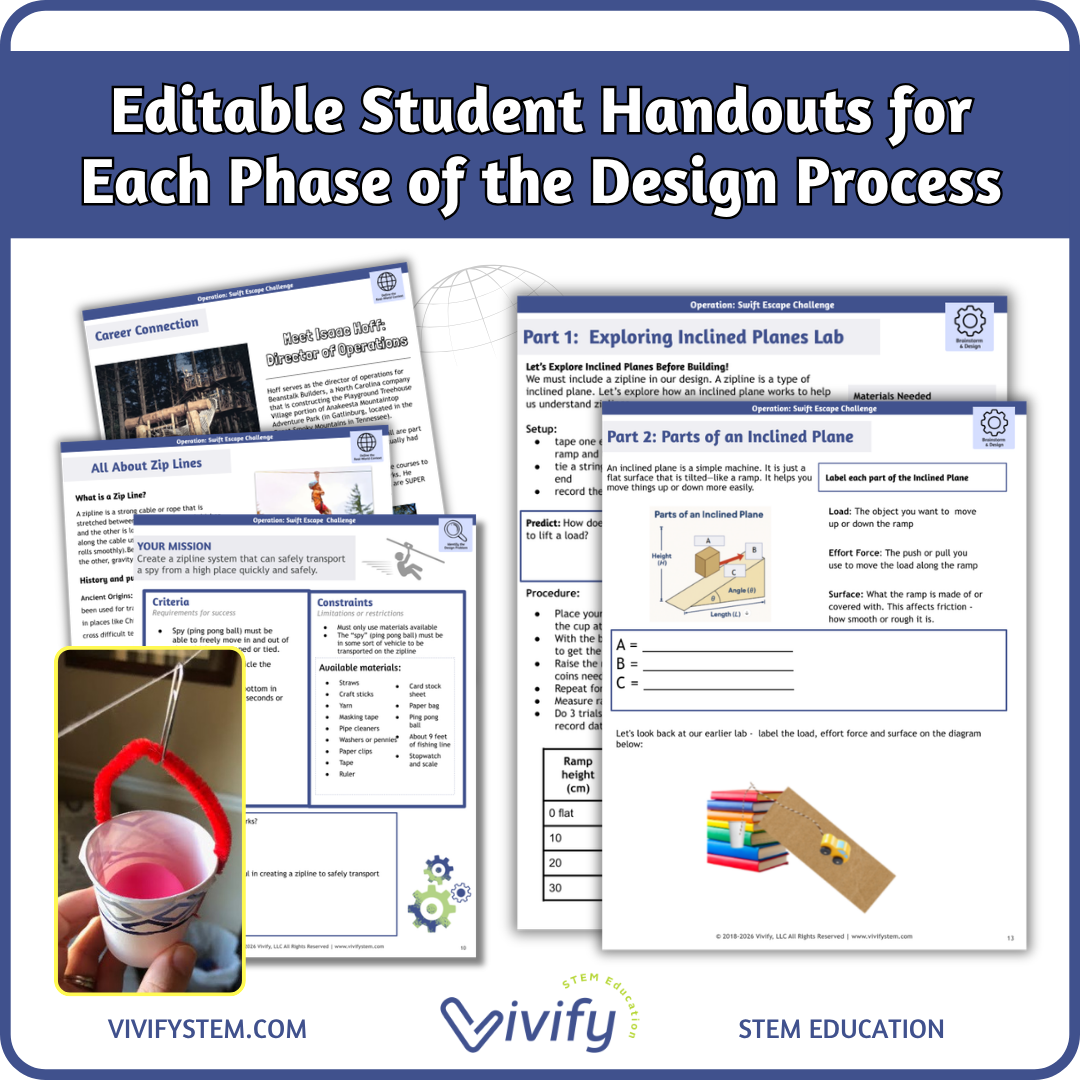
Student handouts for each phase of the design process, including science background, STEM career connection, and more!
Two versions of student badges for completing the mission: pre-colored or a black and white option for students to color themselves to celebrate!
Recommended Supplies:
Materials for building (students should generate this - this is just some ideas of what they might want)
Cardboard sheets - cereal boxes
paper towel and toilet paper rolls
plastic cups, spoons and knives
craft sticks
small boxes and foam board
index cards
masking tape and painters tape (hot glue station)
rubber bands, string/yarn
binder clips and paper clips
rulers, graph paper, scissors and hole punchers
small wooden dowels
blocks or erasers
bottle caps
marbles
spools
small plastic wheels
wooden skewers
triangle wood block
large bolts and nuts or plastic screw set
toy figurine (spy)
Signal Launch Materials:
confetti paper, tissue paper, small flags
paper parachutes, balloons, party blowers
coffee filters
2021 TEKS Alignment
Practices: 5.1A, 5.1B, 5.1C, 5.1D, 5.1E, 5.1G; 5.2D; 5.3A, 5.3B; 5.5A
Content: 5.7A
Supporting Grade 4 Content: 4.7A; 4.8A
Extension — Grade 6: 6.7A; 6.8A, 6.8B