 Image 1 of 4
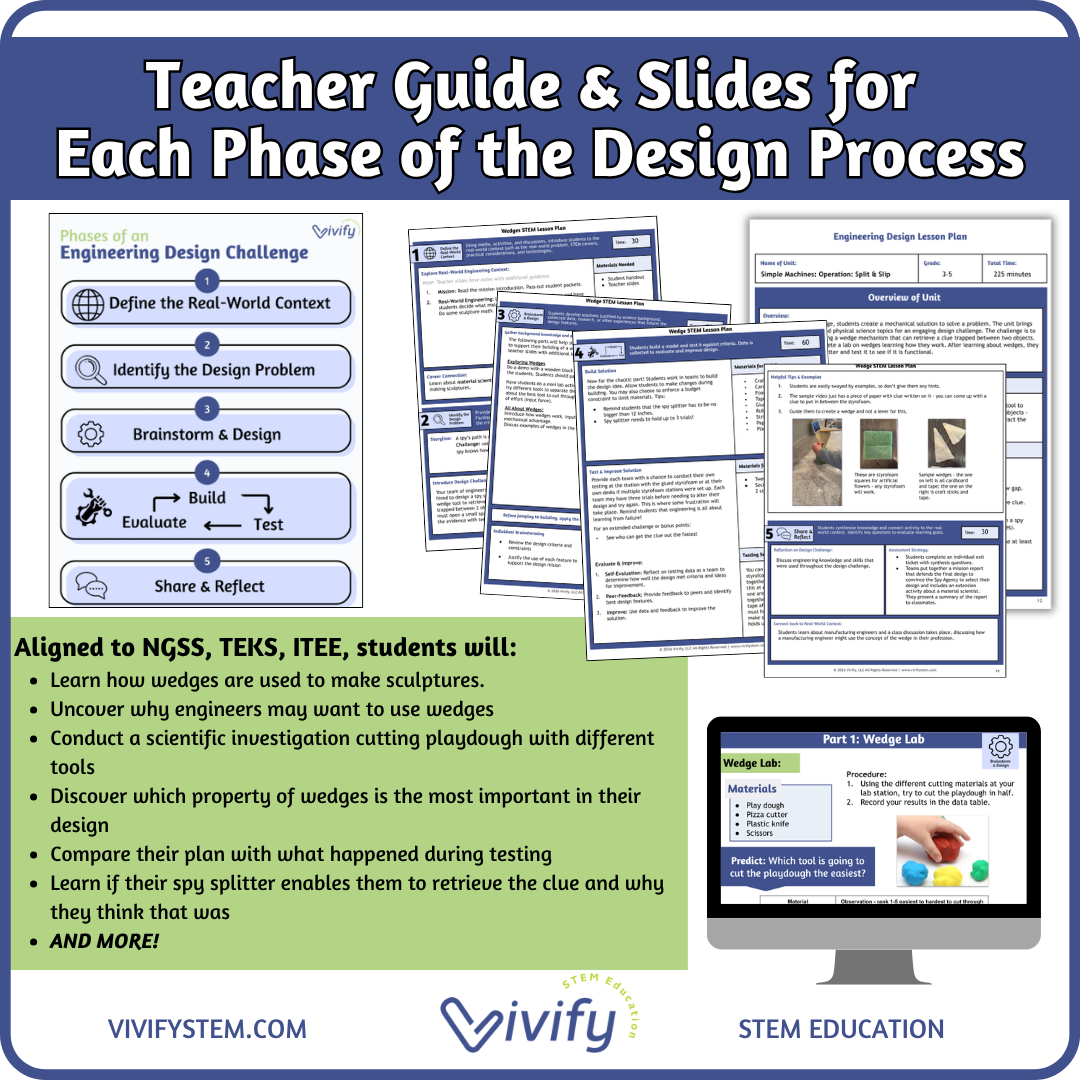 Image 2 of 4
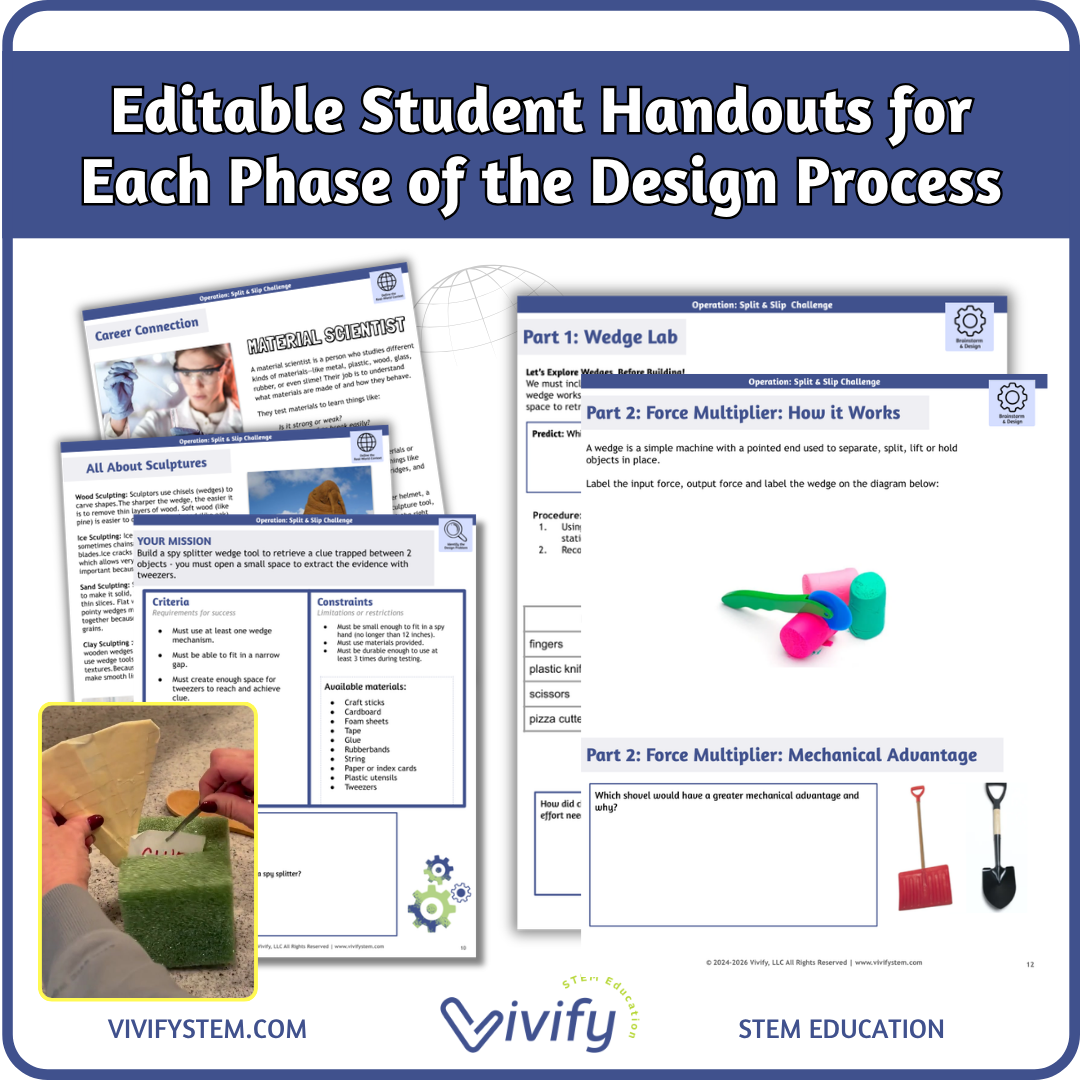 Image 3 of 4
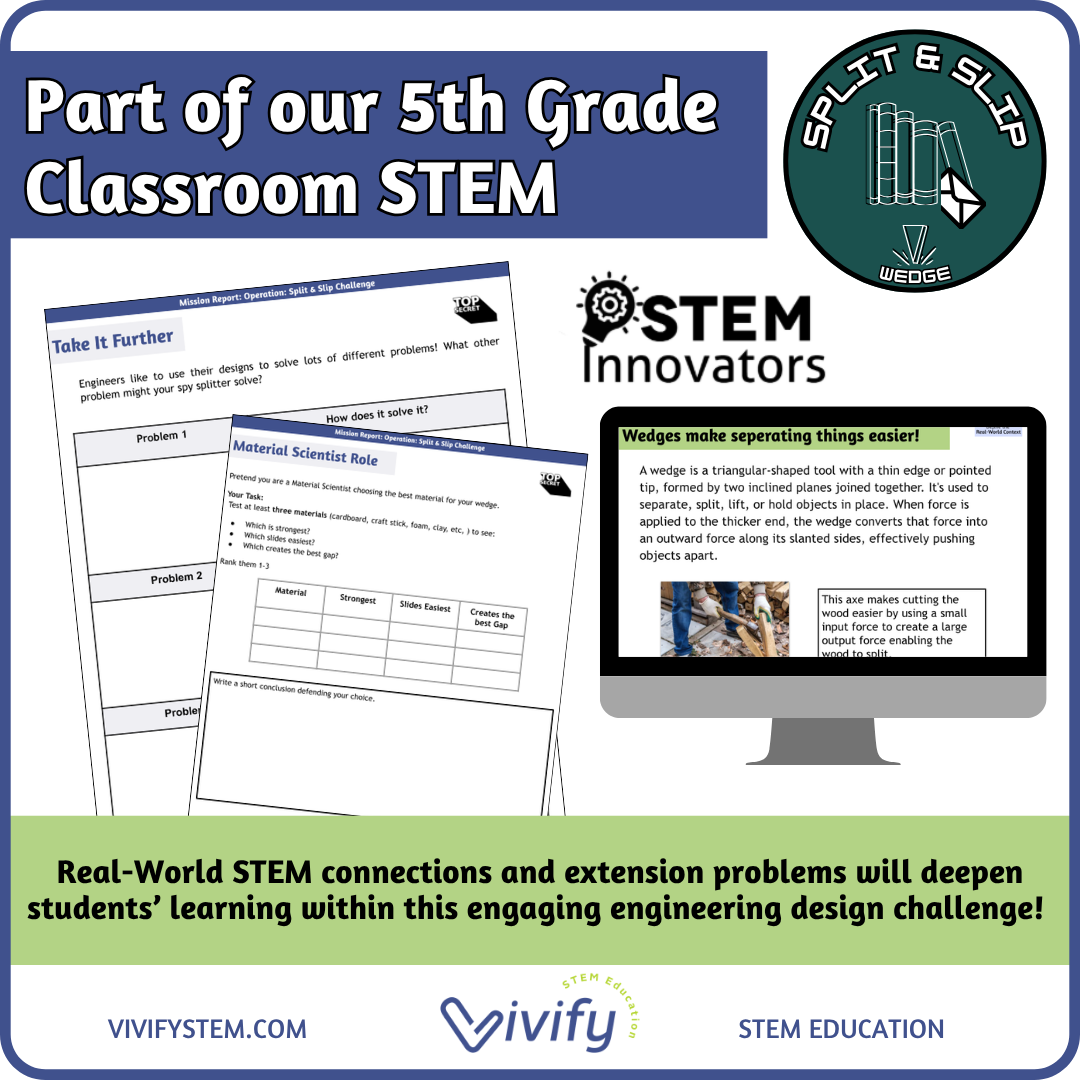 Image 4 of 4
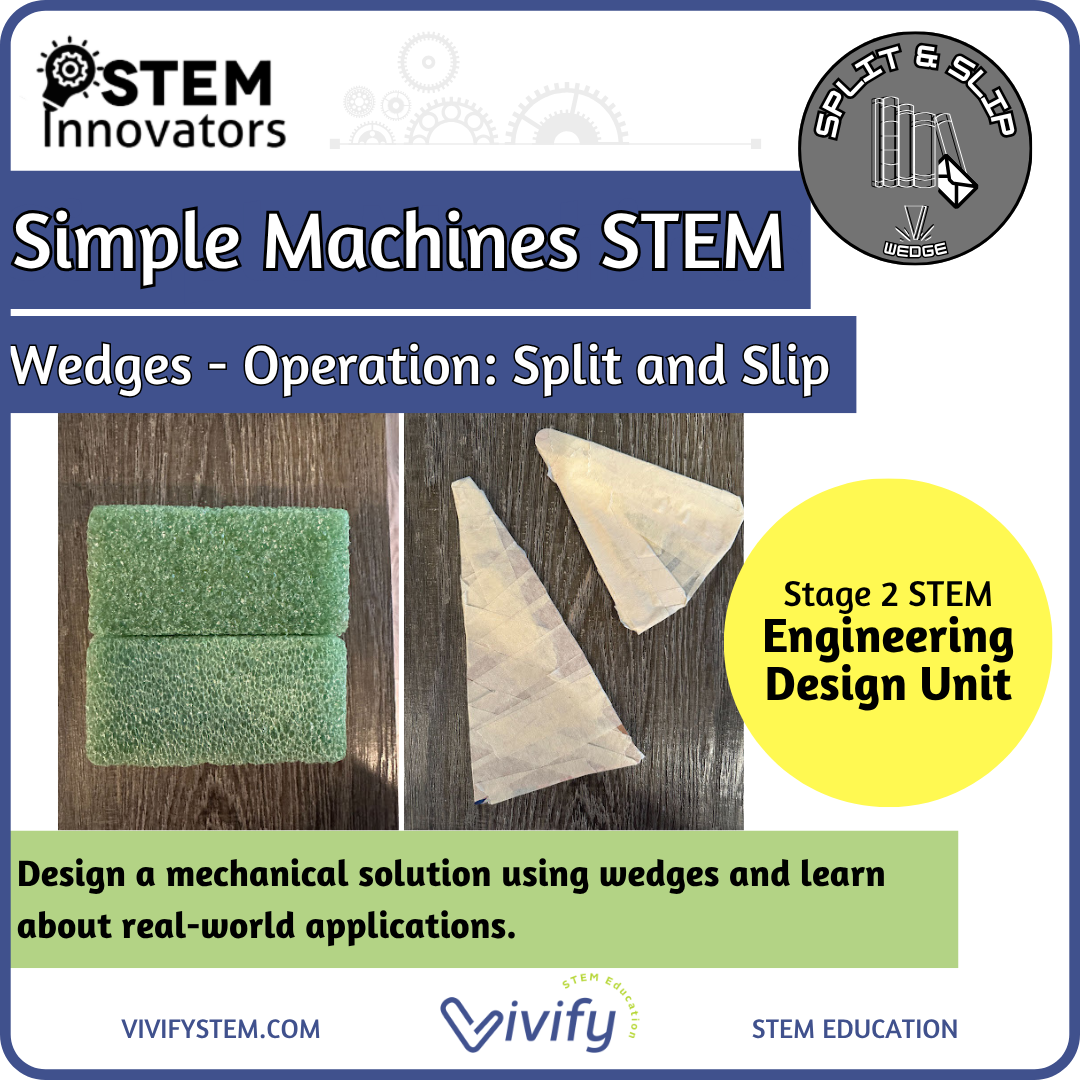
Simple Machines | Wedges: Operation Split and Slip | 5th Grade STEM Innovators
In this hands-on challenge, students create a mechanical solution to solve a problem. The unit brings together engineering and physical science topics for an engaging design challenge. The challenge is to create a spy splitter using a wedge mechanism that can retrieve a clue trapped between two objects.
Students begin by learning how they work and learning about mechanical advantage. Using what they learn, students then design, build, test, and improve their own wedges. Through testing and data collection, they evaluate how well their designs function and make evidence-based improvements, just like real engineers!
Students Will Learn How to:
Learn how wedges are used to make sculptures.
Uncover why engineers may want to use wedges
Conduct a scientific investigation cutting play dough with different tools
Discover which property of wedges is the most important in their design
Compare their plan with what happened during testing
Learn if their spy splitter enables them to retrieve the clue and why they think that was
STEM Innovators Storyline (Adaptable for Grades 3 - 5): Agents, your mission begins now. The world’s top spy agency has recruited the brightest minds for a series of top-secret operations. Your task: design and engineer cutting-edge spy gadgets to crack codes, outsmart villains, and save the day. Succeed, and you’ll rise through the ranks to become an elite STEM Innovator, trusted with the world’s most classified missions.
A Mission to Design a Spy Splitter: In this unit, students will learn about common characteristics of wedges and their various uses. Students will complete mini labs with wedges to spark their curiosity. They will then design and build their own wedge to help their spy retrieve a clue trapped between two objects!
Engineering Learning Goals in this unit include:
Real-World Connections: Learn that engineers use simple machines like wedges to create mechanical solutions to problems, as well as careers as a material scientist and a manufacturing engineer.
Making: Use various materials students will create a functional wedge. Test different materials to make sure their wedge can last at least 3 trials. Re-design based on testing data.
Habits of Mind: Work as a team to build a design that solves a problem. Communicate ideas and provide feedback to peers.
Science: Learn the parts of a wedge, how to use a wedge to make work easier, and about wedges in the real world.
Technology: Learn about wedges and how they are used to solve problems, how a wedge works, and that wedges are used in so many everyday things.
Math: Collect data of the design and use that data to make informed design changes, as well as multiplication, division, and volume.
Included in this product:
Aligned to: NGSS, TEKS, and ITEEA Standards
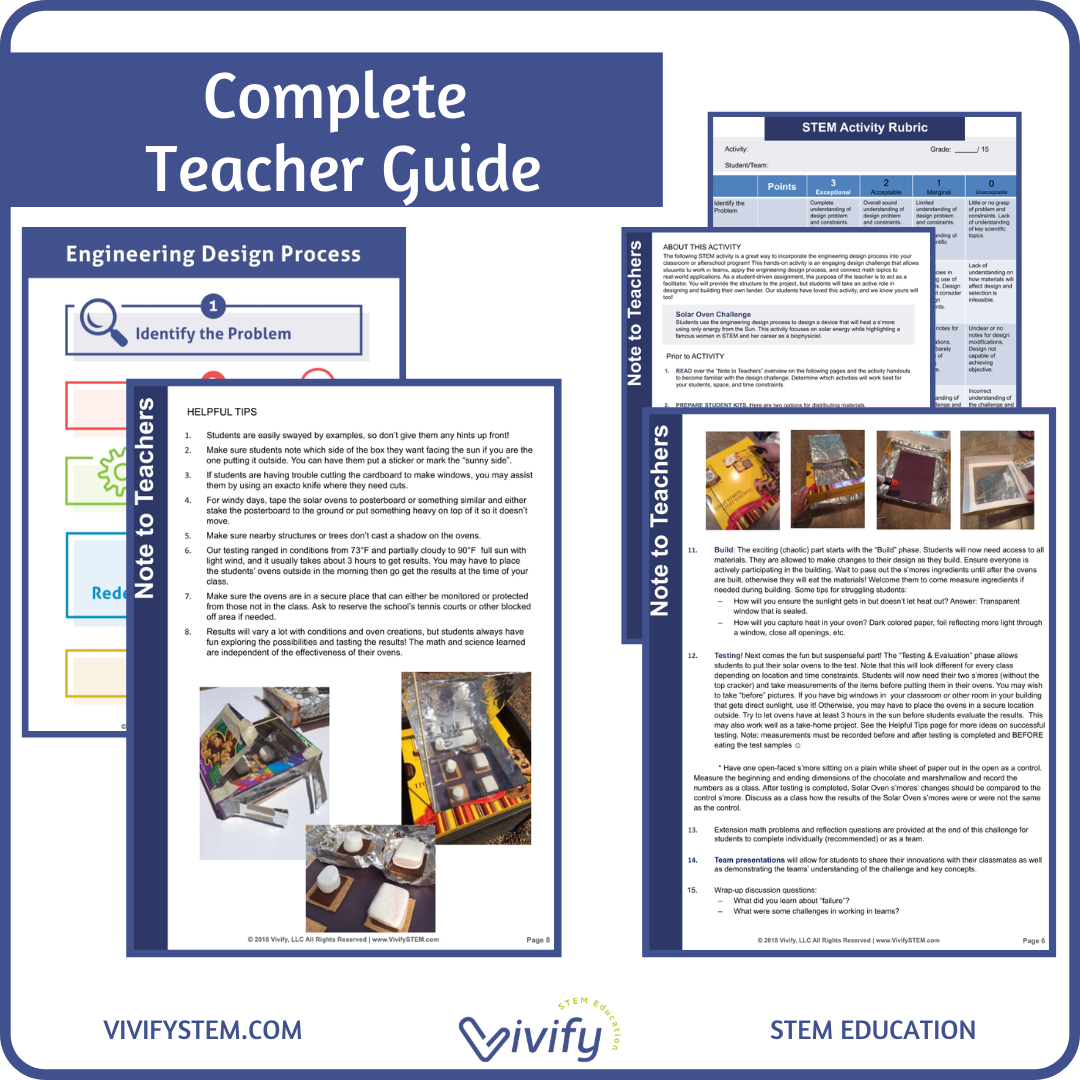
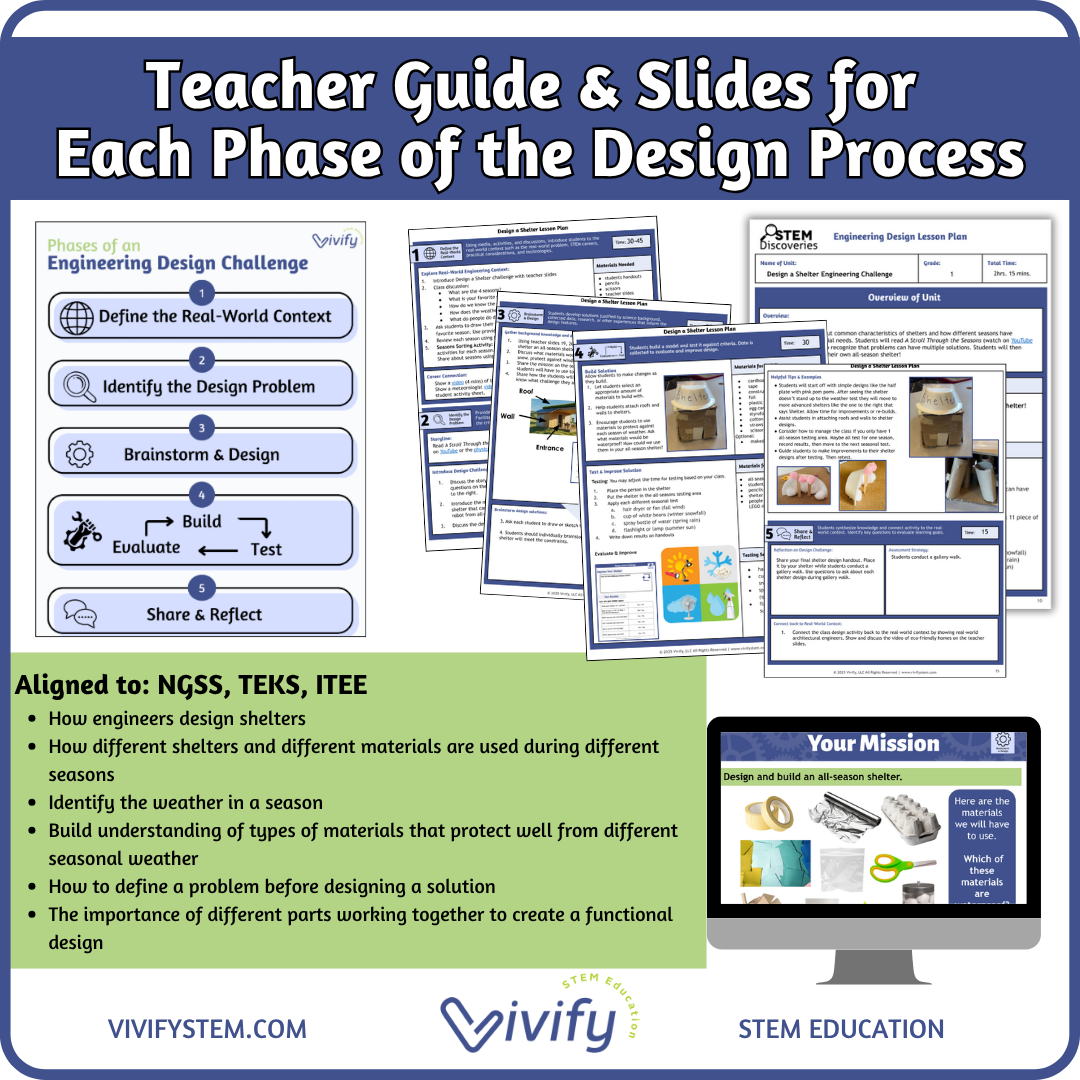
Complete Teacher Guide following the engineering design process
Materials list and activity suggestions
Editable teaching slides
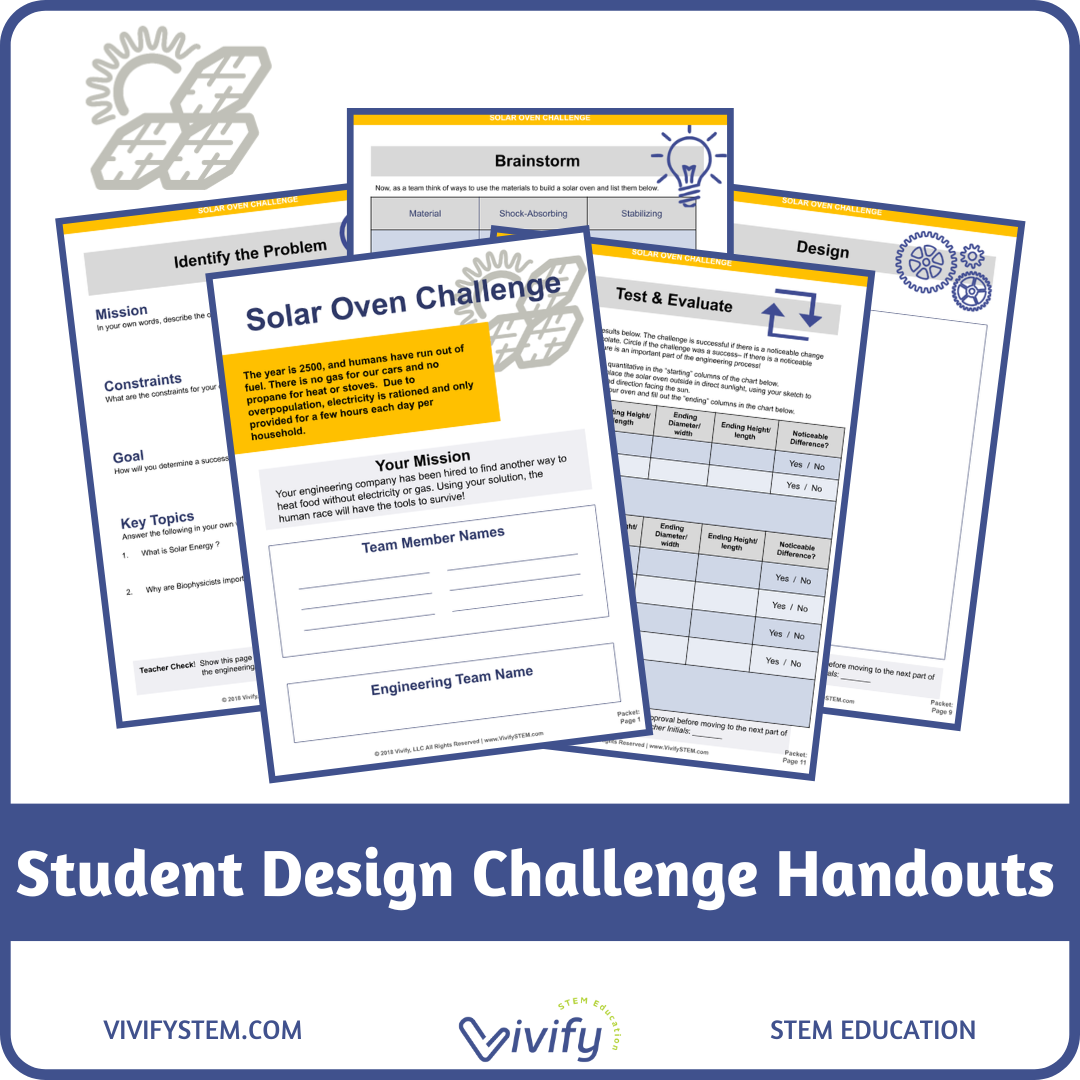
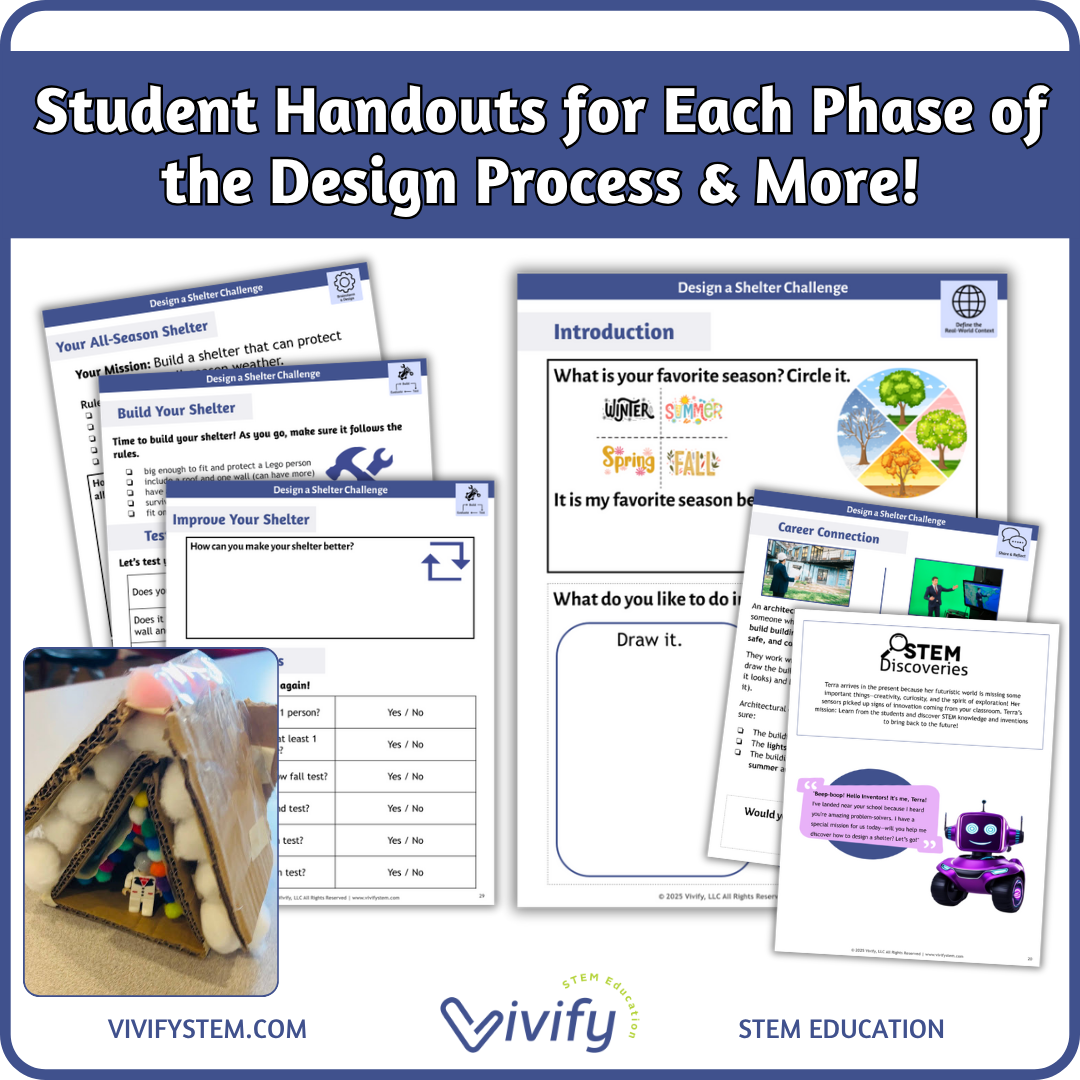
Student handouts for each phase of the design process, including science background, STEM career connection, and more!
Two versions of student badges for completing the mission: pre-colored or a black and white option for students to color themselves to celebrate!
Recommended Supplies:
Building Materials
Craft sticks
Cardboard
Foam sheets
Tape
Glue
Rubber bands
String
Paper or index cards
Plastic utensils
Testing Materials
Tweezers
Secret clue hidden between 2 styrofoam sheets
Demo:
2 containers filled with rice
Wooden block tied to a string
A wooden wedge tied to a string
Force meter
Group Mini Lab:
Play dough
Pizza cutter
Plastic knife
Scissors
2021 Science TEKS Standards Alignment (Texas)
Practices: 3.1-5.1 (A-F); 3.2-5.2 (D); 5.1A-F; 5.2D; 5.5A
Content: 3.7A; 4.7A; 5.7A/B