 Image 1 of 4
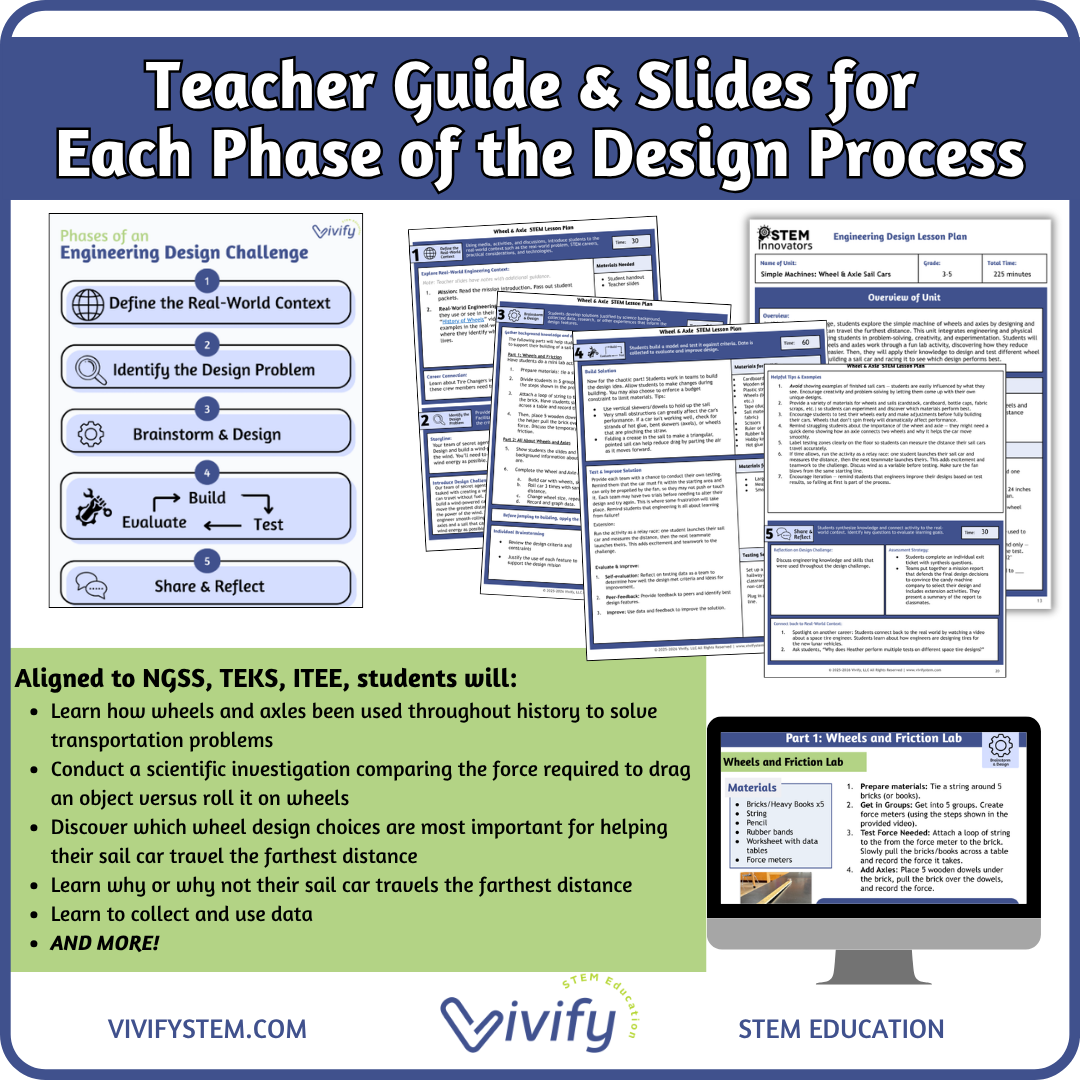 Image 2 of 4
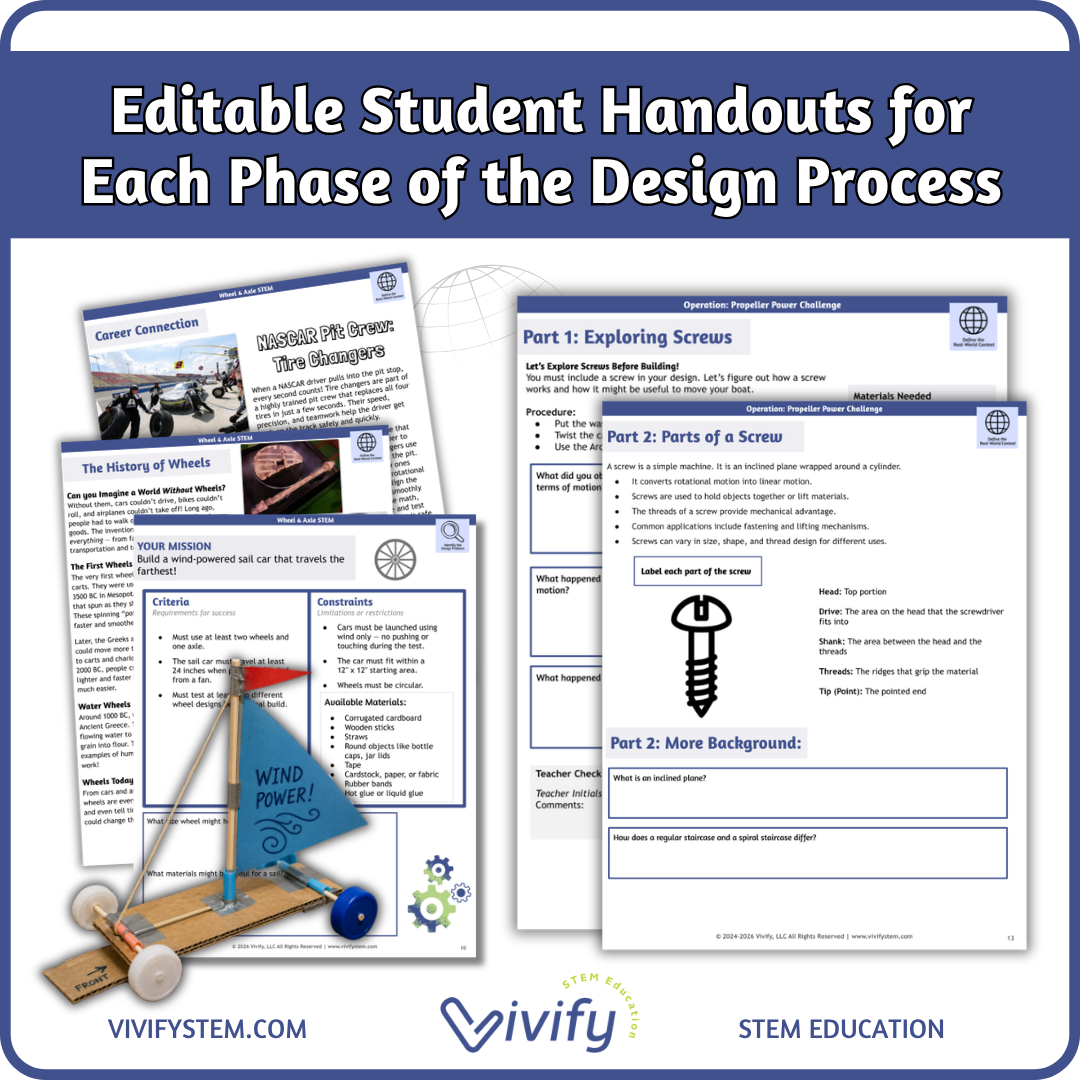 Image 3 of 4
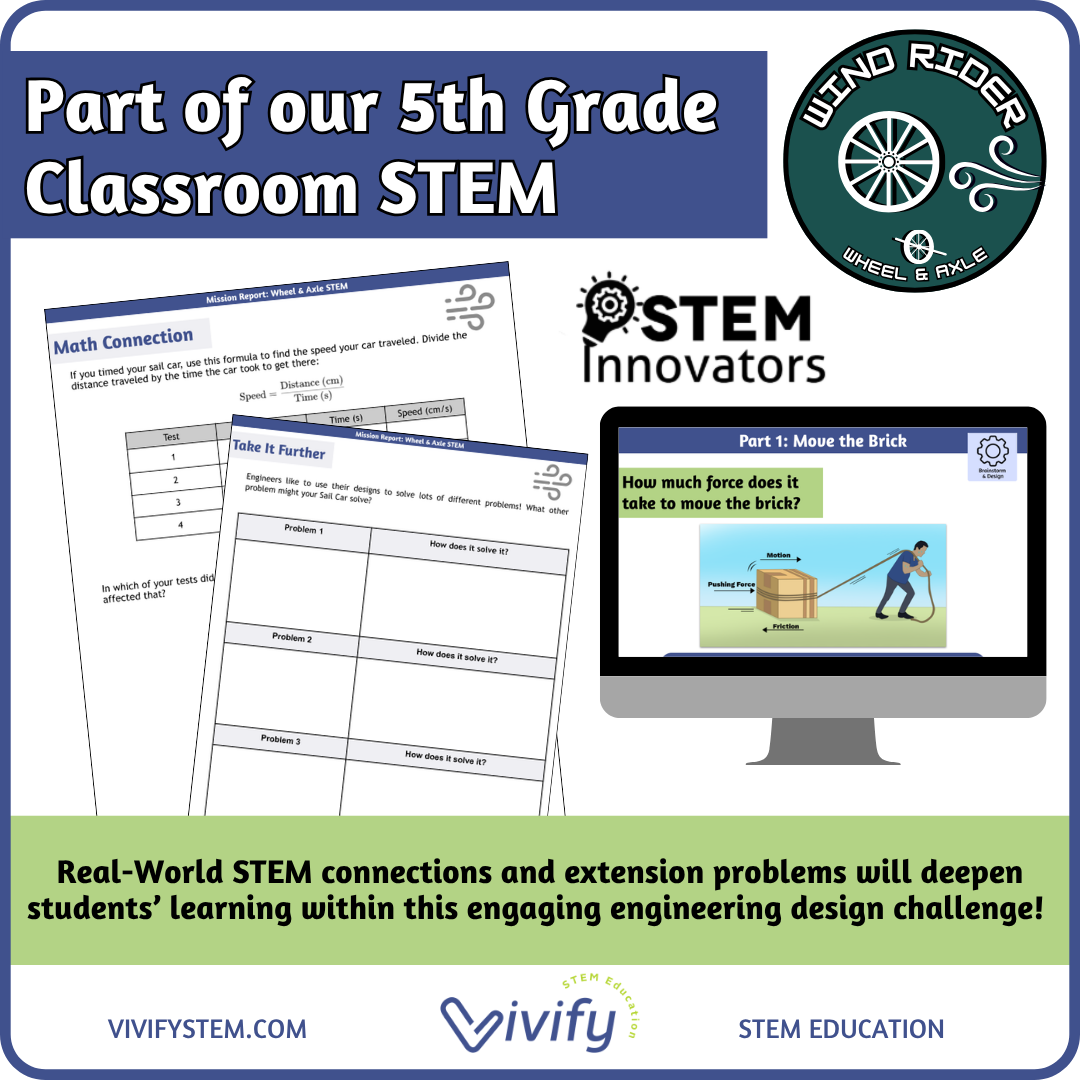 Image 4 of 4
Simple Machines | Wheel & Axle: Operation Wind Rider | 5th Grade STEM Innovators
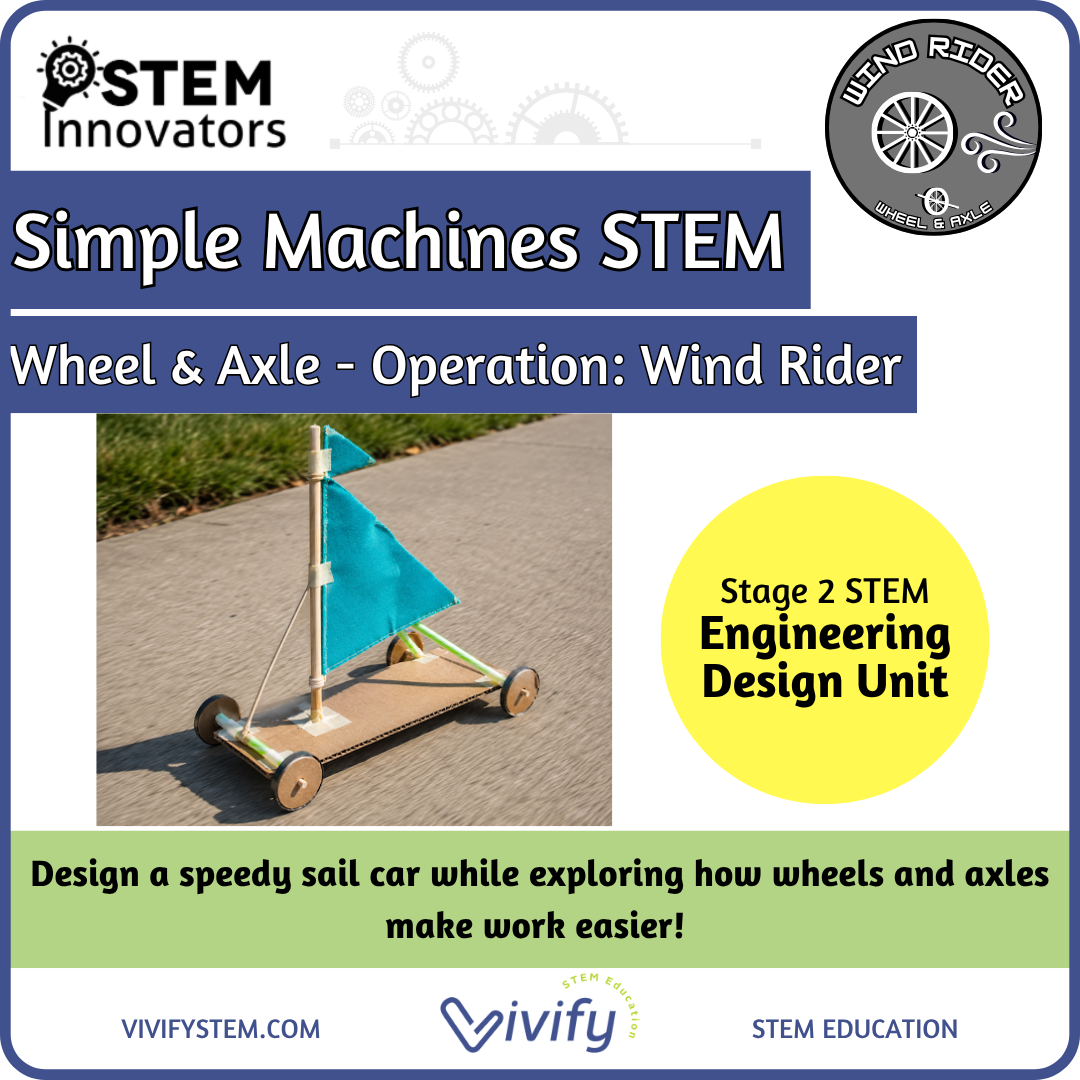
In this hands-on challenge, students explore the simple machine of wheels and axles by designing and building a sail car that can travel the furthest distance. This unit integrates engineering and physical science concepts, engaging students in problem-solving, creativity, and experimentation.
Students will first investigate how wheels and axles work through a fun lab activity, discovering how they reduce friction and make work easier. Then, they will apply their knowledge to design and test different wheel prototypes, ultimately building a sail car and racing it to see which design performs best!
In This Lesson, Students Will:
Learn how wheels and axles been used throughout history to solve transportation problems
Conduct a scientific investigation comparing the force required to drag an object versus roll it on wheels
Discover which wheel design choices are most important for helping their sail car travel the farthest distance
Learn why or why not their sail car travels the farthest distance
Learn to collect and use data
STEM Innovators Storyline (Adaptable for Grades 3 - 5): Agents, your mission begins now. The world’s top spy agency has recruited the brightest minds for a series of top-secret operations. Your task: design and engineer cutting-edge spy gadgets to crack codes, outsmart villains, and save the day. Succeed, and you’ll rise through the ranks to become an elite STEM Innovator, trusted with the world’s most classified missions.
A Mission to Design a Sail Car: In this unit, students will learn about common characteristics of wheels and axles and their various uses. Students will complete mini labs to spark their curiosity. They will then design and build their own sail car to help their spy travel the farthest distance powered by wind!
Engineering Learning Goals in this unit include:
Real-World Connections: Exploring how ancient cultures used primitive rollers to solve transportation challenges and learning about a career as a mechanical engineer and how engineers test, improve, and document their designs.
Making: Building wheel prototypes using a variety of materials, designing and assembling a sail car body and sail using provided materials, and re-designing based on testing data.
Habits of Mind: Working as a team to build a design that solves a problem and communicating ideas and provide feedback to peers.
Science: Exploring how friction, force, and motion affect the distance a sail car can travel as well as measuring force in newtons using a spring scale.
Technology: Learning about wheels and axles and how they are used to solve problems, discovering that wheels and axles are used in many everyday objects, and exploring how engineers innovate and improve designs over time.
Math: Collecting data of the design, using the data to make informed design changes, and calculating the mean to create a more accurate tool for measuring force.
Included in this product:
Aligned to: NGSS, TEKS, and ITEEA Standards
Complete Teacher Guide following the engineering design process
Materials list and activity suggestions
Editable teaching slides
Student handouts for each phase of the design process, including science background, STEM career connection, and more!
Two versions of student badges for completing the mission: pre-colored or a black and white option for students to color themselves to celebrate!
Recommended Supplies:
Building Materials
Cardboard – corrugated works best
Wooden skewers or thin dowel rods – for axles (12 in)
Straight Plastic straws – to act as axle guides
Various round objects to test as wheels (e.g., bottle caps, cardboard circles, wooden discs, jar lids)
Tape – duct tape or masking tape
Sail materials
Construction paper or cardstock OR recycled fabric scraps
Scissors
Ruler or measuring tape
Rubber bands (for attaching parts or optional tension-based design ideas)
Hobby knife/Box Cutter
Hot glue gun/liquid glue
Testing Materials
Large fan or strong hair dryer
Measuring tape
Smooth testing surface
Intro Demo Materials
Heavy objects- such as bricks or books (x5)
12 in x ¼ inch Wooden dowels (x30)
String and Rubber bands (x5)
Springs (x5)
100 g mass x5
2021 Science TEKS Standards Alignment (Texas)
Practices: 1A/B/D/E/F/G, 2A/C/D, 3A/B, 4A/B/C
Content: 3.6B, 4.7B, 5.6D, 5.7A/B