 Image 1 of 4
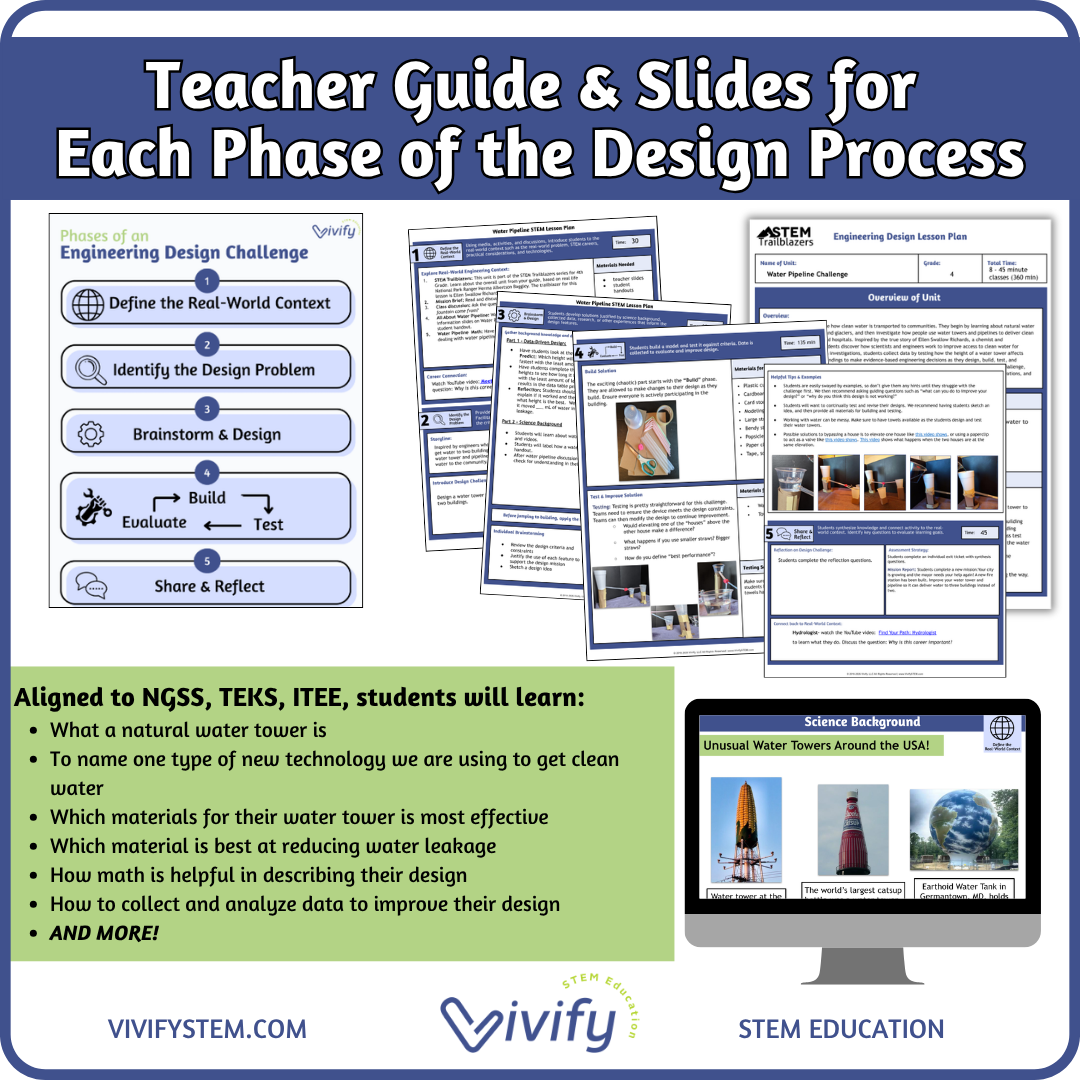 Image 2 of 4
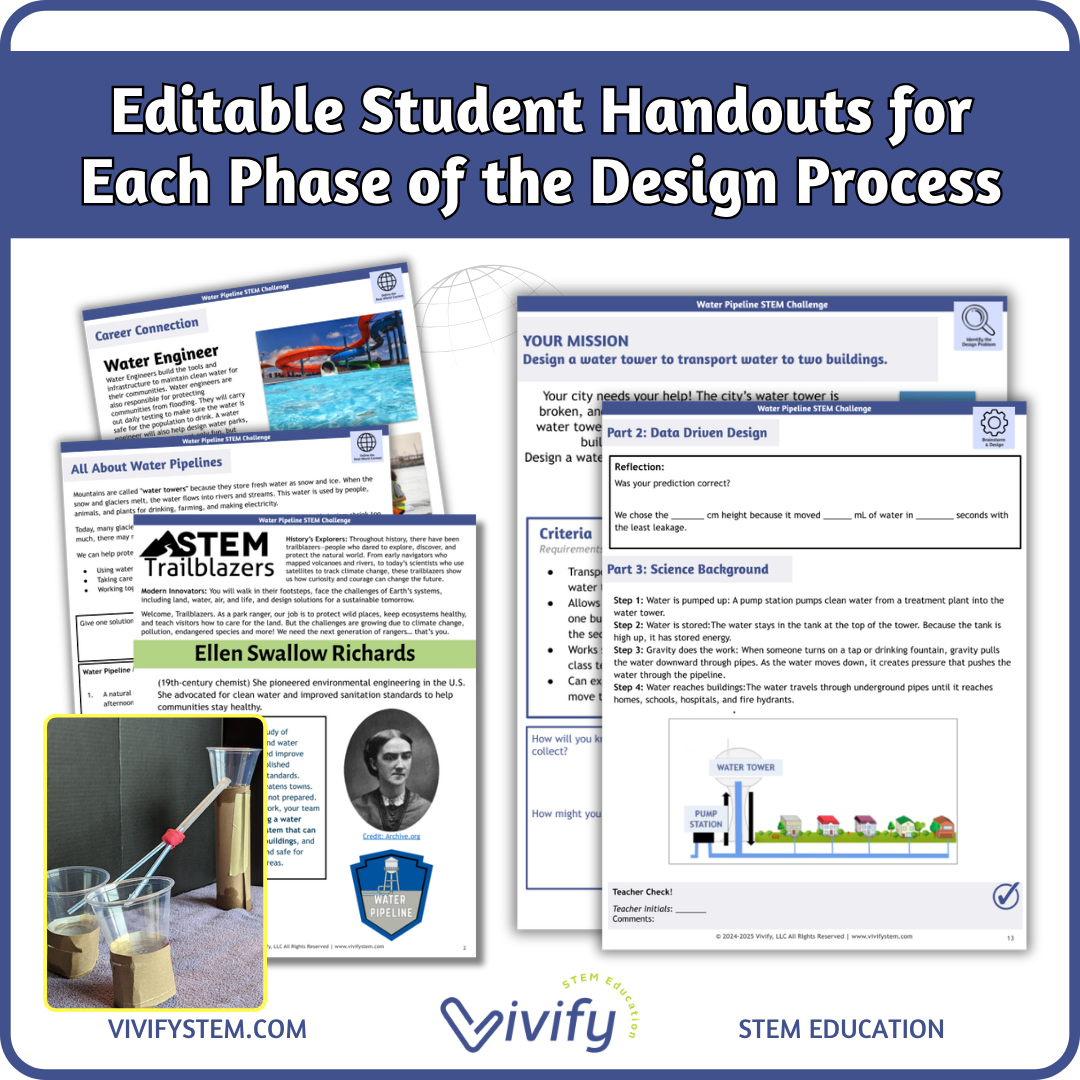 Image 3 of 4
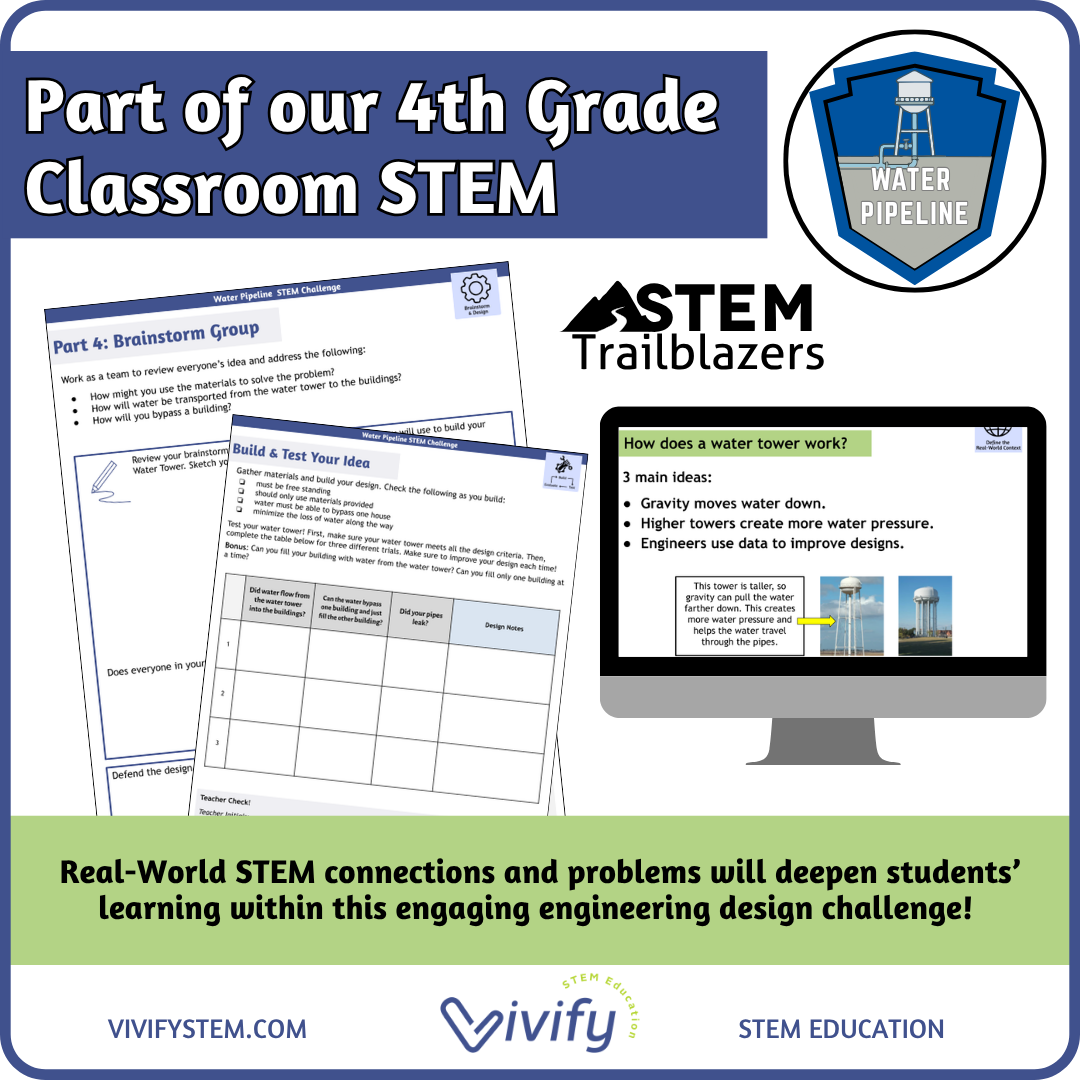 Image 4 of 4
“Materials from Vivify STEM are always well thought out and developed. Guides are well written and provide thorough details for instruction and background knowledge. Student materials guide progress and allow for individual differences and abilities. ”
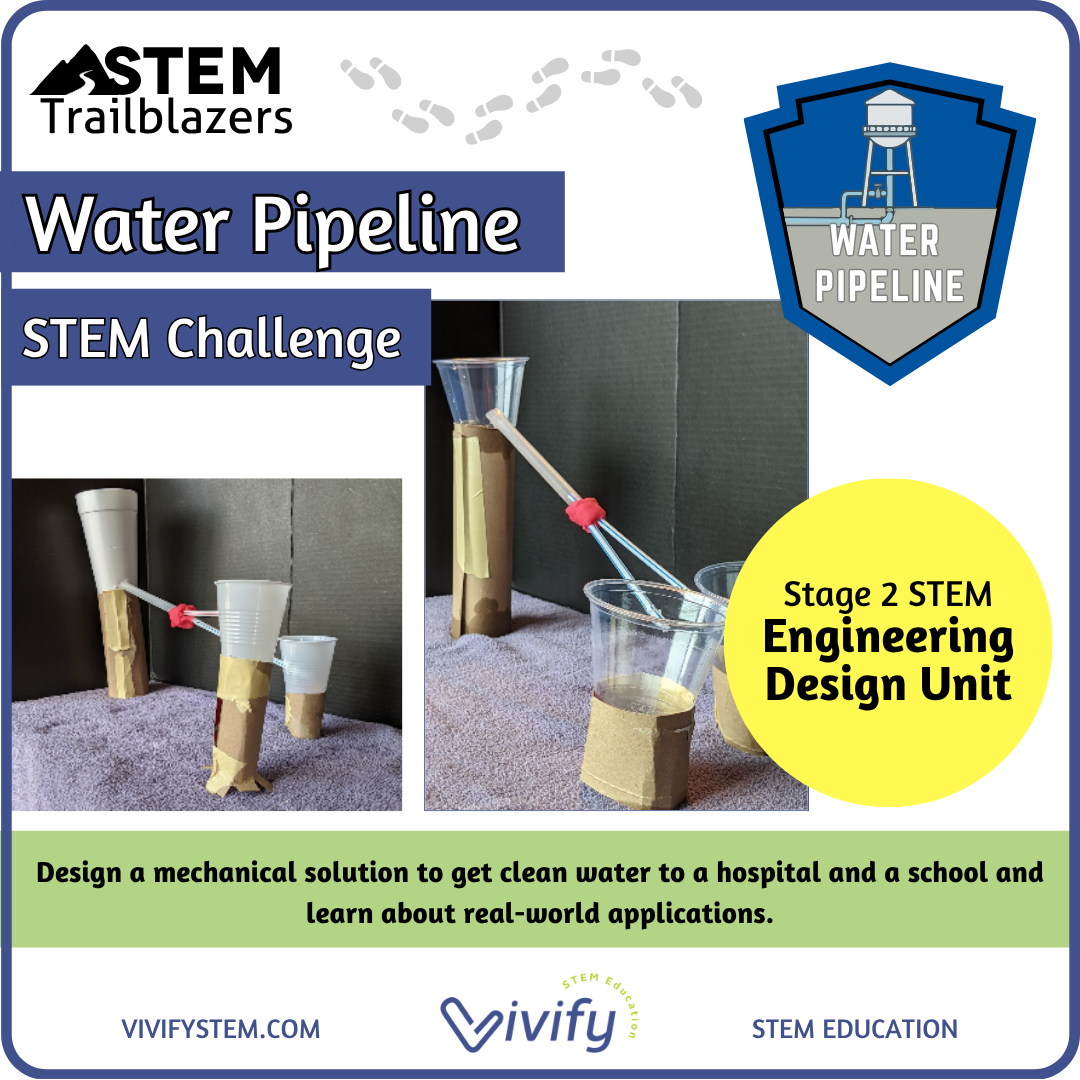
Water Pipeline STEM Engineering Design Challenge | 4th Grade STEM Trailblazers
In this unit, students explore how clean water is transported to communities. They begin by learning about natural water towers, such as mountains and glaciers, and then investigate how people use water towers and pipelines to deliver clean water to homes, schools, and hospitals.
Inspired by the true story of Ellen Swallow Richards, a chemist and environmental engineer, students discover how scientists and engineers work to improve access to clean water for everyone.
Through hands-on investigations, students collect data by testing how the height of a water tower affects water flow. They use their findings to make evidence-based engineering decisions as they design, build, test, and improve a water tower and pipeline system that delivers water to two different locations.
Throughout the challenge, students take on the roles of scientists and engineers, using the engineering design process, scientific observations, and problem-solving skills to create innovative solutions for transporting clean water.
Students Will Learn:
What a natural water tower is
To name one type of new technology we are using to get clean water
Which materials for their water tower is most effective
Which material is best at reducing water leakage
How math is helpful in describing their design
How to collect and analyze data to improve their design
AND MORE!
STEM Trailblazers Storyline (Adaptable for Grades 3 - 5): Welcome, Trailblazers. As a park ranger, our job is to protect wild places, keep ecosystems healthy, and teach visitors how to care for the land. But the challenges are growing due to climate change, pollution, endangered species and more! We need the next generation of rangers… that’s you.History’s Explorers: Throughout history, there have been trailblazers—people who dared to explore, discover, and protect the natural world. From early navigators who mapped volcanoes and rivers, to today’s scientists who use satellites to track climate change, these trailblazers show us how curiosity and courage can change the future.
History’s Explorers: Throughout history, there have been trailblazers—people who dared to explore, discover, and protect the natural world. From early navigators who mapped volcanoes and rivers, to today’s scientists who use satellites to track climate change, these trailblazers show us how curiosity and courage can change the future.
Modern Innovators: You will walk in their footsteps, face the challenges of Earth’s systems, including land, water, air, and life, and design solutions for a sustainable tomorrow.
Engineering Learning Goals in this unit include:
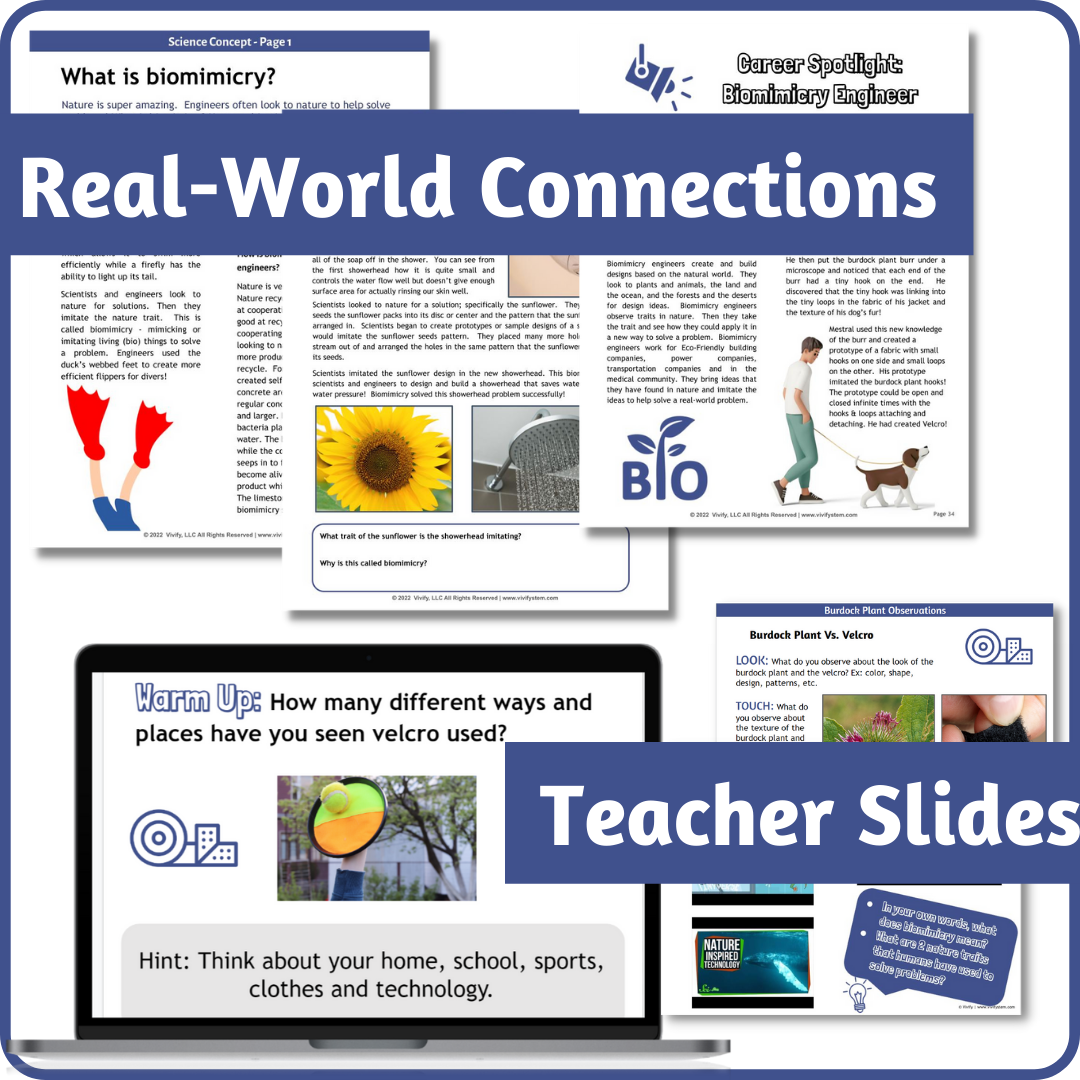
Real-World Connections: Learn about natural and man made water towers and explain what a Water Engineer does.
Making: Build a functioning model using common materials that can transport water from a water tower to 2 buildings.
Habits of Mind: Define the criteria and constraints of the engineering problem, use data and research to inform design decisions, and evaluate design performance and identify ways to improve.
Science: Explore materials to find out if height makes a difference in water movement through a simple pipeline.
Technology: Learn different technologies to collect and distribute water for human use.
Math: Collecting data to make informed design decisions.
Included in this product:
Aligned to: NGSS, TEKS, and ITEEA Standards
Complete Teacher Guide following the engineering design process
Materials list and activity suggestions
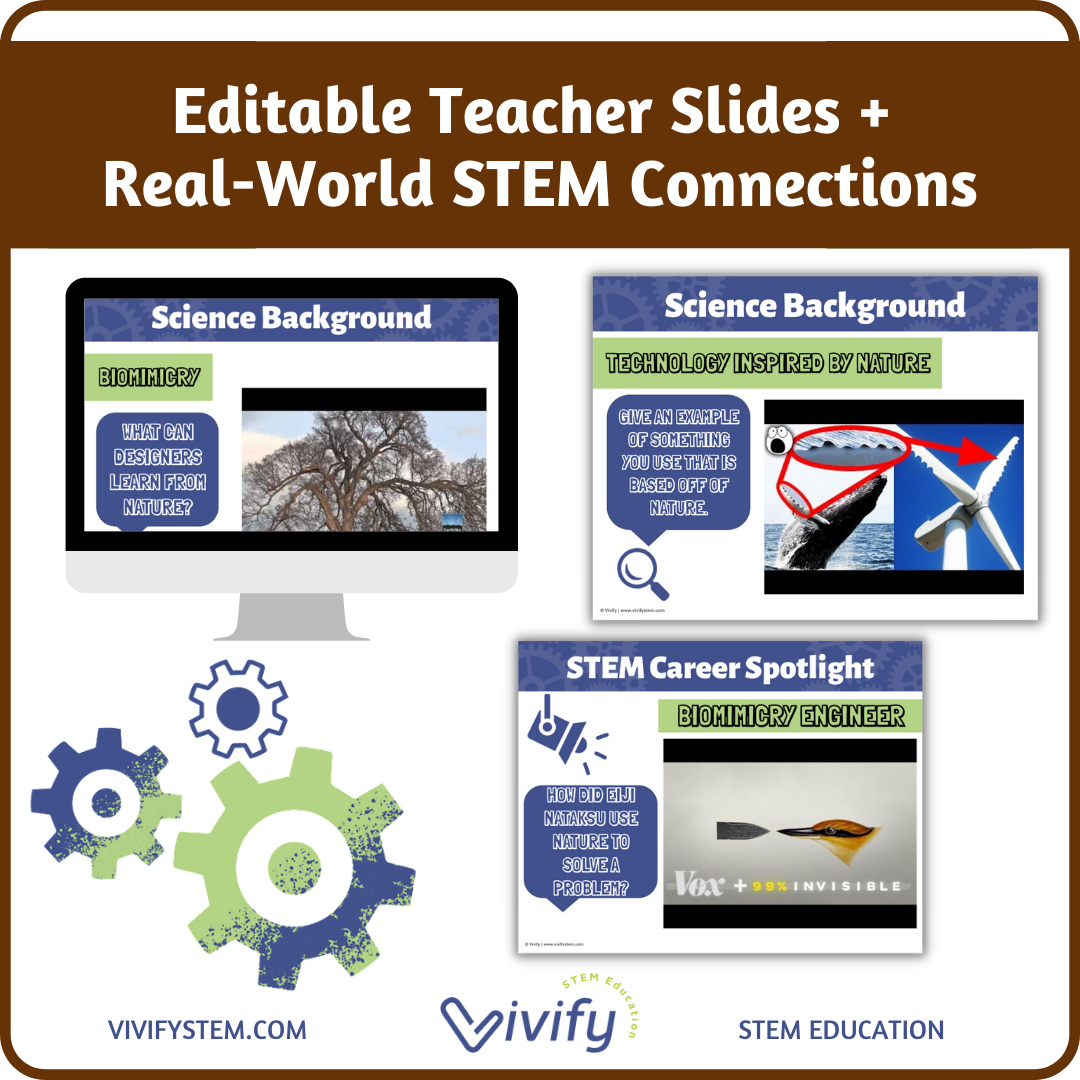
Editable teaching slides
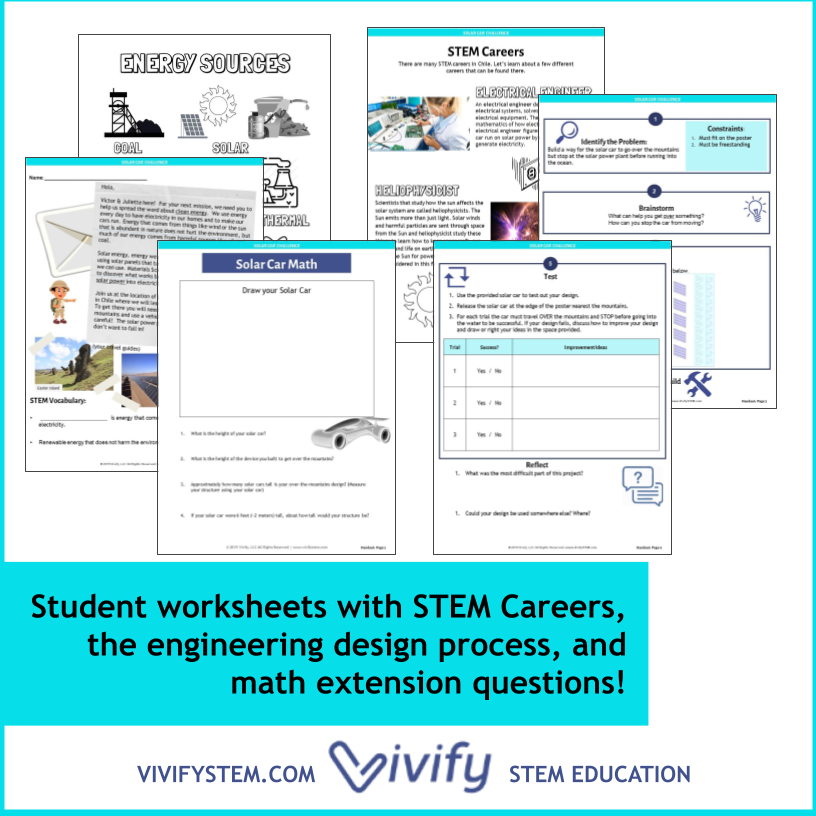
Student handouts for each phase of the design process, including science background, STEM career connection, and more!
Two versions of student badges for completing the mission: pre-colored or a black and white option for students to color themselves to celebrate!
Recommended Supplies
Student Materials:
Plastic cups (avoid paper cups)
Cardboard
Card stock
Modeling clay
Large straws (smoothie size)
Bendy straws
Popsicle sticks
Paper clips
Tape, scissors, ruler
Testing Materials:
Water
Towel for any water spills
2021 Science TEKS Standards Alignment (Texas)
Practices: 4.1A, 4.1B, 4.1D, 4.1E, 4.1G; 4.2A, 4.2B, 4.2C, 4.2D; 4.3A
Content: 4.7A